Al-Qalam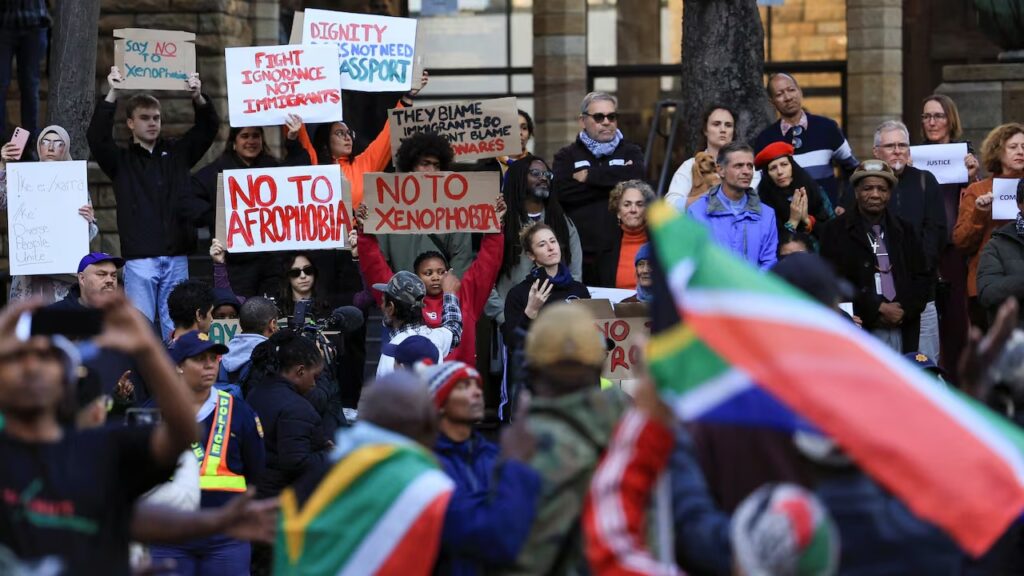
By Azra Hoosen
More than 60 civil society organisations, faith groups, trade unions and community movements from South Africa and across the continent are expected to unite under the banner of “Operation Ubuntu”, calling for an end to xenophobia, greater protection for vulnerable communities and justice for all Africans.
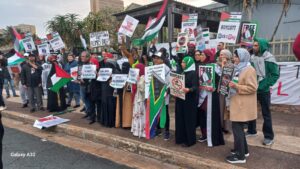
Operation Ubuntu marches will take place tomorrow (Saturday, August 8) in three cities across South Africa – Durban, Cape Town and Johannesburg. In Durban, supporters are expected to assemble outside the eThekwini Mayor’s Offices at 10 am. Organisers are also encouraging communities across Africa to hold vigils at 8 pm Central African Time, with participants asked to wear red as a symbol of sacrifice, unity and solidarity.
Durban community activist Saydoonisa Sayed of the South Africa Palestine Movement, told Al-Qalam that Operation Ubuntu was a call to revive a shared humanity and stand in solidarity with vulnerable communities. “There is no place in Islam for xenophobia, racism, Afrophobia or hatred towards those seeking safety,” she said.
Sayed noted that the early Muslim communities welcomed those fleeing persecution with generosity and compassion, urging communities to uphold those same principles today.
Shaheed Mahomed, the Cape Town organiser for the Operation Ubuntu campaign and member of the Workers International Vanguard League, told Al-Qalam that the campaign is about sending a clear message that xenophobic violence does not represent the values of ordinary South Africans. “The broader community in South Africa is not xenophobic. We live in peace with our migrant and refugee sisters and brothers. We felt there has to be a public response, not only issuing statements or providing relief, but saying to the world that the people of South Africa stand shoulder to shoulder with immigrants and refugees,” he said.


The march comes amid growing concern over attacks on foreign nationals and is being held on the eve of Women’s Day to highlight the vulnerability of women and children, particularly those displaced by conflict, poverty and migration.
According to the organisers, their campaign extends beyond opposing xenophobia. Their demands include land and housing justice, opposition to the PIE Amendment Bill, stronger action against gender-based violence, an end to the criminalisation of poverty, and what they describe as an end to the exploitation of Africa’s wealth by multinational corporations.
Mahomed said that xenophobia is not unique to South Africa but is a global phenomenon. “When there are xenophobic attacks, it divides us and when we are divided, it makes it easier for the capitalists and imperialists controlling Africa,” he said.
He believes public anger is being directed at migrants instead of those profiting from the continent’s wealth. “The question is always that these people are taking our resources. It’s a major distraction from who is really taking our resources,” he added.
He argued that instead of blaming migrants for unemployment and poverty, attention should be directed towards the large-scale extraction of Africa’s resources and economic policies that continue to leave many communities struggling.
He said that the country’s wealth should be used to improve housing, healthcare, education and job creation rather than allowing ordinary people to be turned against one another.



Mahomed said undocumented migrants are often blamed for problems they did not create. “The poor migrant who is coming here either as a refugee or as an economic migrant should be welcome to come here,” he said.
“We are saying, document the workers and propose a two-year moratorium on the mass expulsions taking place,” he added.
Mahomed stressed that the government should focus on addressing systemic failures instead of targeting vulnerable communities.
Mahomed said Operation Ubuntu is intended to be the start of a broader movement across the continent: “We are making a historic call. We are waiting for workers, communities and people across Africa to respond… to say, ‘Africa unites’.”
Organisers said that the initiative was intended to remind Africans that lasting solutions to poverty, inequality and violence can only be achieved through solidarity rather than division.
He highlighted that Surah An-Nisa (4:36) instructs believers to show kindness to relatives, neighbours, travellers and those in their care, adding that these teachings remind Muslims to respond to migrants and refugees with compassion rather than hostility.