Al-Qalam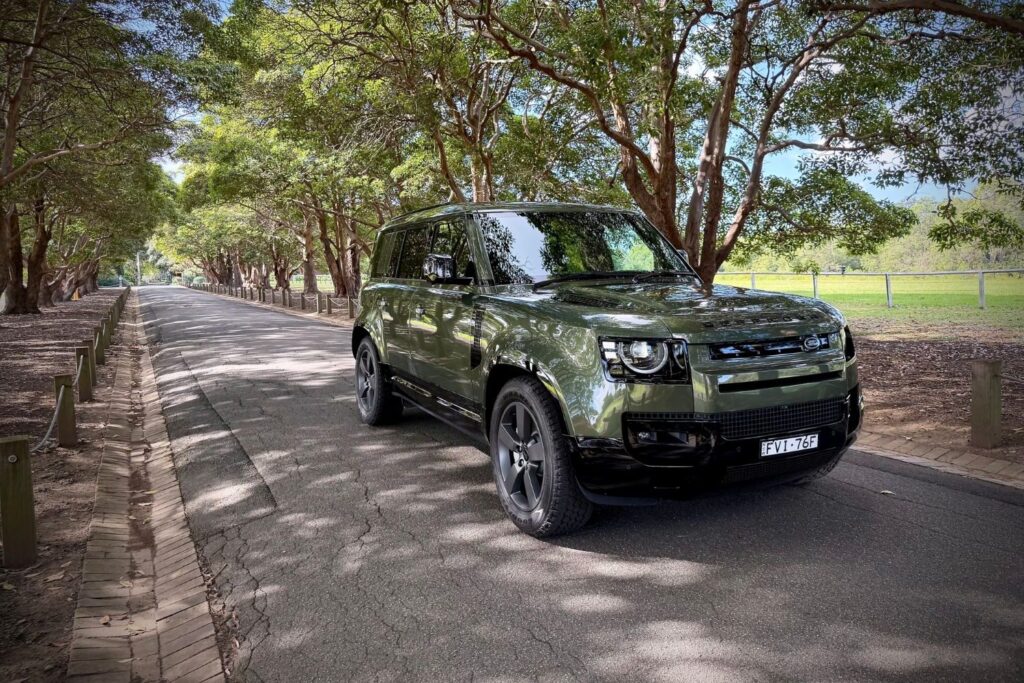
By Imraan Buccus
There are some cars that you drive and immediately understand what you’re in for. Then there are cars that seem to have a personality of their own. The Land Rover Defender falls firmly into the latter category.
The Defender makes a trip to Woolies feel adventurous but is happier disappearing down a dirt road in the Drakensberg, with the nearest tar road a distant memory.
The latest Defender 110 D350 takes things a little further, replacing the previous D300 with a more powerful version of Land Rover’s 3.0-litre inline-six turbo-diesel.
I was extra fortunate to have the Defender 110 D350 X-Dynamic HSE on a recent trip to Cape Town. A detailed description may not be necessary. Just think of the Defender gliding along the picturesque Chapman’s Peak drive, followed later, on the same day, cruising along the Atlantis Dunes -white sand, blue skies and the Table Mountain offering a beautiful view in the distance.
Power and more power
The figures are impressive. The 3.0-litre six-cylinder diesel produces 257kW and a substantial 700Nm of torque, enough to propel this sizeable SUV from 0 to 100km/h in a claimed 6.4 seconds. That is simply amazing for a vehicle weighing around 2.4 tons.
More importantly, it is the way that torque arrives that makes the D350 so enjoyable. Cruising along a stretch of road with the ocean in sight, a slight tap on the accelerator makes overtaking a slow-moving truck considerably less stressful. The engine has that deep, muscular diesel character that seems particularly appropriate for a vehicle carrying the Defender name.
It claims fuel consumption of around 8.5 litres per 100km, but real-world figures are closer to 11 litres per 100km. That’s not economical for sure, but considering the Defender’s size, weight and performance, it is hardly shocking.
Familiar, but smarter
Land Rover hasn’t radically altered the Defender’s design, and that is probably a good thing. It remains one of the most distinctive SUVs on South African roads. The upright stance, squared-off proportions and rear-mounted spare wheel give it an unmistakable presence.
There are subtle changes, though. The headlights have been revised, the rear lamps sit more neatly into the rear door and there are new finishes and detailing, including the lovely Woolstone Green colour of the test vehicle.
Inside, the changes are more noticeable. The infotainment screen has grown to a substantial 13.1 inches and is beautifully integrated into the dashboard. It is quick and clear and, importantly, easy to read. The 12.3-inch digital driver’s display is equally useful, allowing navigation information to sit directly in front of the driver
Storage has also been reconsidered, and there are USB-C charging points aplenty.
The cabin remains one of the Defender’s greatest strengths. It feels robust without feeling cheap and luxurious. Soft-touch materials and leather sit alongside chunky, hard-wearing surfaces that remind you this is still a vehicle designed to go places where the road has long since disappeared.
Where the Defender makes its point
The aluminum-intensive D7x architecture and electronic air suspension give it an impressive ability to deal with rough surfaces. Corrugated gravel roads and South African potholes are dealt with remarkably calmly. Anyone who has driven a badly corrugated road towards a bush lodge in KwaZulu-Natal will appreciate this.
The Defender 110 is arguably the sweet spot of the range when it comes to ride comfort. It isn’t quite as cosseting as a BMW X5 on smooth tar, but the BMW certainly does not have the Defender’s extraordinary off-road ability.
You sacrifice a little on-road plushness and gain a machine capable of taking you considerably further once the tar disappears. There is up to 900mm of wading capability, while maximum ground clearance in off-road height rises to around 11.5 inches. In other words, the Defender isn’t simply pretending to be adventurous. It really is.
A Defender made for South Africa
There is a temptation to dismiss the modern Defender as an expensive lifestyle accessory.
And, to be fair, plenty of them will probably spend most of their lives negotiating parking at Gateway, the Waterfront or Sandton City rather than river crossings. But that doesn’t make the capability irrelevant. The Defender doesn’t feel uncomfortable at all when the tar ends.
South Africa is a country where a vehicle can be required to perform several completely different jobs in the same weekend. It can take you through Johannesburg traffic on Friday afternoon, carry the family down to the KwaZulu-Natal coast, swallow luggage for a trip into the bush and then tackle a gravel road that looks as though nobody has maintained in 20 years.
The price of being different
There is, of course, one significant obstacle. This vehicle is not cheap. Costing well over R2m with extras, the Defender 110 D350 X-Dynamic HSE is not an impulse purchase. And Land Rover’s options catalogue is extensive enough to make it frighteningly easy to add another few hundred thousand rand to the bill. And that may be its most compelling selling point.
Ultimately…
The Defender 110 D350 is an unusual thing in today’s SUV market.
It is genuinely luxurious without becoming soft. It is enormously capable without feeling agricultural and it is fast enough to embarrass some supposedly sporty SUVs while retaining the ability to disappear down a track that would have most calling for assistance.
The Defender has something many of its rivals struggle to manufacture personality. It feels like a proper adventure vehicle that has somehow learned to enjoy the finer things in life.
Price: R2 033 000 before optional extras
Engine: 3.0-litre turbocharged six-cylinder diesel
Transmission: Eight-speed automatic
Power: 257 kW
Torque: 700 Nm
Claimed fuel consumption: 8.5 l/100 km
0–100 km/h: 6.4 seconds claimed / 6.57 seconds tested
Luggage capacity: 857–1 946 litres
Optional seven-seat configuration: 160–1 826 litres
Wading depth: Up to 900 mm
Architecture: D7x aluminium-intensive monocoque
Suspension: Electronic air suspension
Off-road system: Terrain Response 2
Off-road technology: Adaptive off-road cruise control, terrain cameras and electronic air suspension