Al-Qalam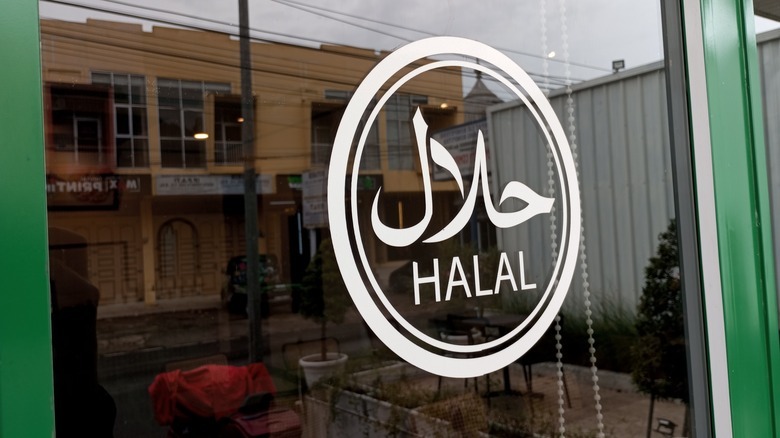
By Iqbal Jassat
Business Day has published a letter of complaint regarding Halal certification, which, apart from being contradictory, is deliberately conflated with what the writer refers to as “consumer awareness and transparency”.
In addition to his attempt at mischief-making by hoping to provoke the ire of Christians through injecting a controversy on the Halal industry in South Africa, it will not be far removed to conclude that he does so in pursuit of Israel’s Islamophobic agenda.
That he represents an agency linked to the settler colonial regime which faces serious charges of committing genocide in Gaza, Daniel Jacobi and his outfit known as “South African Friends of Israel”, it does not surprise us that he would do so.
Published on 6 August 2026, and titled “Religious certification’s role in consumer choice”, it is riddled with contradictions.
For instance, his question about why Halal certified products have become the “default standard in so many supply chains” is explained and answered by himself.
“Businesses are free to seek certification where there is consumer demand or export markets require it. For many manufacturers, halal certification is a commercial decision that opens access to local and international markets”, is his explanation.
Indeed, if it is understood in such logical terms, underlined by the fact that Halal certification is purely a dietary requirement, not a bogey of any sort, nor associated with what Israeli-inspired Hasbara (propaganda) peddles as “Islamist terrorism”, why then is it necessary to politicize it as Jacobi does?
We are confident that the overwhelming majority of South Africa’s consumers respect and accept Halal as a matter of dietary choice, health standards, and consumer transparency rather than an ideological symbol.
It is common wisdom that the guidelines for Halal certification share similar imperatives for Kosher certification. These are, amongst others, hygiene, cleanliness, ethical treatment of animals and quality control.
Crucially, these practices ensure food safety, which benefits all consumers regardless of faith.
While these facts are indisputable, Jacobi’s dispute lies elsewhere. It is to politicise an Islamic imperative, which he unashamedly does by injecting red herrings.
His fake concerns must be rejected with contempt.
Jacobi is the same person who, on the appointment of former Minister Naledi Pandor as chair of the Nelson Mandela Foundation (NMF), publicly alleged that it has been hijacked by “radicals”.
He also led a group of South African members of parliament and religious leaders on a highly controversial trip to Israel during 2025.
Jacobi confirmed that the trip was made and described it as “a mission to discover historic facts to Israel.”
The confirmation took place after the Good Party raised questions about its “secret mission.”
At the time, Rebecca Davis (Daily Maverick) critiqued it by claiming that it seemed to have been “a very one-sided ‘fact-finding mission’”.
She correctly assessed that any of the nine South African MPs who visited Israel on a recent “fact-finding mission” will testify to the media that “there was no evidence of apartheid and, to the contrary, Israel is a vibrant progressive multi-racial and multi-ethnic society, in which the rights of all citizens are protected and upheld by the rule of law”.
Her conclusion was based on the claim of the group that organised the trip in its press statement: “All delegates observed that, and will confirm with South African media, that there was no evidence of apartheid and, to the contrary, Israel is a vibrant progressive multi-racial and multi-ethnic society, in which the rights of all citizens are protected and upheld by the rule of law.”
By all accounts, it is evident that Jacobi and his pro-Israeli aligned group are invested in promoting and defending the Zionist-apartheid regime.
The issue of Halal thus becomes a convenient decoy to raise the ire of South African consumers against Muslims at a time the country is confronted with social issues related to foreign migrants, xenophobia and Islamophobia.
*Iqbal Jassat is an Executive Member of the Media Review Network (MRN)