Al-Qalam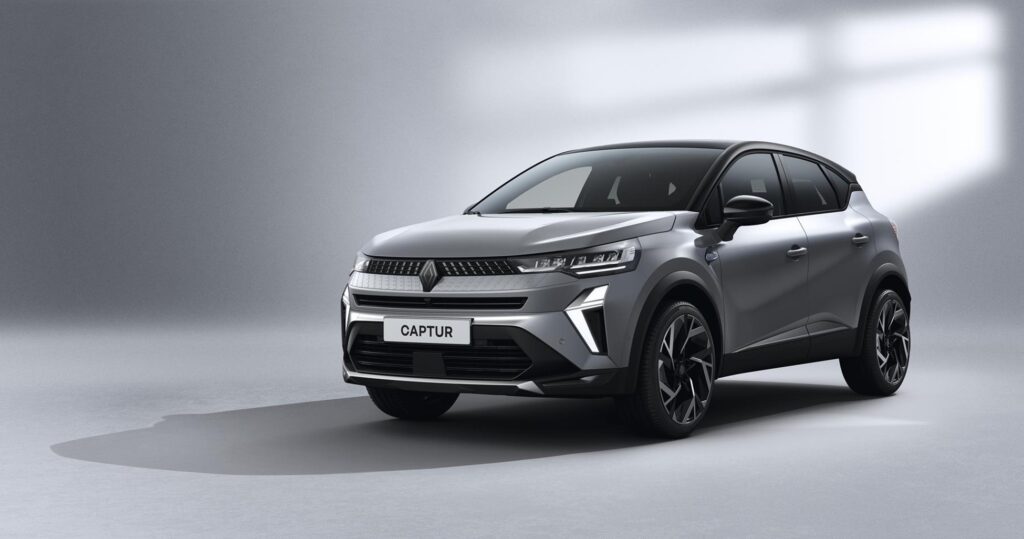
By Imraan Buccus
There is something rather appealing about French cars, even though they have not always been popular in South Africa. This is even though the Peugeot 3008 won the European Car of the Year award a few years ago, outdoing even the Mercedes E-Class. There are embedded reasons for the attitude in South Africa, but it is clear that this needs to change.
The facelifted Renault Captur makes the case for a change even stronger. The flagship Esprit Alpine has the sort of visual confidence that gets attention anywhere it goes. In a South African market increasingly populated by similar-looking compact SUVs, that is no small achievement.
French attitude with sharper edges
Renault has given the Captur a substantial visual rethink. Gone are many of the softer, rounded lines of the previous model. In their place is a more structured, confident design that gives the little crossover considerably more road presence.
The front end is particularly successful. A broad grille incorporates Renault’s modern Nouvel’R emblem, while distinctive half-diamond-shaped LED daytime running lights give the Captur an unmistakable face. It looks expensive and trendy.
The rear has received similar treatment, with translucent style taillamp housings and a revised lower section creating a wider appearance. Renault has managed to make the Captur look substantially more sophisticated without being over the top.
The Esprit Alpine takes the visual drama a step further. It has a matte-grey front and rear skid plates, blacked-out badges and imposing 19-inch Elixir alloy wheels.
A little engine but…
All three South African Captur variants share the same 1.3-litre turbocharged four-cylinder petrol engine.
The engine produces 113kW and 270Nm, driving the front wheels through a seven-speed dual-clutch EDC automatic transmission.
Renault claims 0–100km/h in 9.6 seconds. The 270Nm arrives usefully, giving the Captur enough vroom overtake and making it feel considerably more energetic than its modest engine capacity might suggest.
There can be occasional hesitation from the dual-clutch gearbox at low speeds, particularly when pulling away from a robot or crawling through congested traffic. Once moving, however, the transmission settles into its rhythm nicely.
Fuel consumption is equally respectable. The claimed figure is 6.6 litres/100km, and careful long-distance driving can see the Captur dip below that. For South African road trips, that combination of punch and economy makes considerable sense.
On the inside
Inside, Renault has resisted some of the excesses of modern car designs. The 10.4-inch portrait touchscreen dominates the dashboard, offering wireless Apple CarPlay and Android Auto, but thankfully there are still physical controls for the climate system. For anyone who has tried adjusting the temperature while travelling down the N3 in heavy traffic, this is the sort of detail that matters.
The Esprit Alpine’s recycled sports-fabric upholstery and blue stitching add personality, although not every surface feels particularly premium. Harder plastics remain lower down in the cabin, reminding you that this is ultimately a compact crossover rather than a luxury car.
Where the Captur really scores is practicality. The rear bench can slide through 160mm. Push it rearwards and rear passengers get generous legroom. Slide it forwards and boot capacity increases from 484 litres to 616 litres. Fold the rear seats and you have up to 1 596 litres at your disposal.
For a small family, that is great for the weekend away and shopping becomes much less of a logistical exercise.
Ride quality
The Captur’s dynamics are another strength. Steering is nicely weighted, body control is impressive and there isn’t excessive lean when you push it through bends. It feels secure and predictable rather than artificially sporty.
There is also surprisingly good refinement. At highway speeds, wind and tyre noise are kept under control, making the Captur a pleasant for longer journeys between our big cities.
The Techno’s 17-inch wheels and Iconic’s 18-inch wheels provide a much more agreeable compromise between handling and comfort. The Esprit Alpine’s 19-inch wheels, wrapped in low-profile rubber, look terrific and are great on smooth national roads -less so on our many pot-holed roads.
Safety matters
The Captur’s safety specification is respectable. The Techno includes airbags, electronic stability control and rear parking assistance. The Iconic adds front parking sensors and a 360-degree camera, while the Esprit Alpine brings blind-spot monitoring and lane-keeping assistance. All of these are useful in a market where safety has become a priority.
The final take
At around R615 000, the Esprit Alpine is pricy but is no doubt a stylish and entertaining crossover. Renault has a tougher market to contend with a multitude of contenders in this segment.
The R515 999 Techno is arguably the cleverest buy. You retain the same 1.3-litre turbocharged engine, 270Nm of torque, seven-speed automatic gearbox, touchscreen technology and sliding rear bench, while saving almost R100 000. The R544 999 Iconic is even more tempting. It adds useful equipment, including the 360-degree camera, while avoiding the Esprit Alpine’s unforgiving 19-inch wheels. I would go for that.
Lastly, for a quick overview:
Models: Techno | Iconic | Esprit Alpine
Price: R515 999 | R544 999 | R614 999
Engine: 1.3-litre turbocharged four-cylinder petrol
Power: 113kW
Torque: 270Nm
Transmission: 7-speed dual-clutch automatic
Drive: Front-wheel drive
Claimed 0–100km/h: 9.6 seconds
Tested 0–100km/h: 8.81 seconds
Claimed fuel consumption: 6.6L/100km
Boot capacity: 484–616 litres; 1 596 litres with rear seats folded
Warranty: 5 years/150 000km
Service plan: 3 years/45 000km