Al-Qalam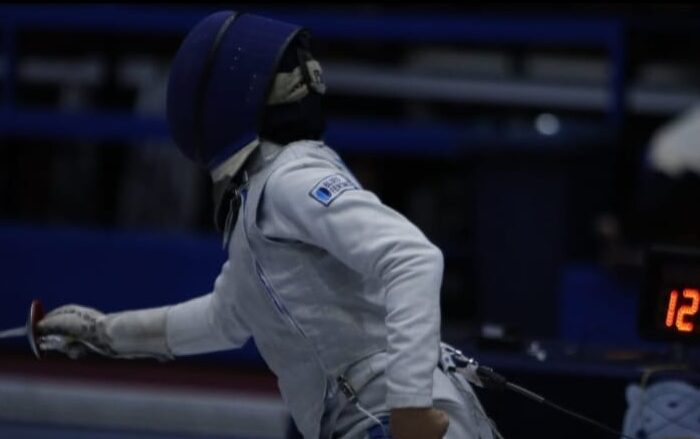
By Neelam Rahim
When South African national fencer Hafidhah Ruqaya Ismail steps onto the fencing strip at the Commonwealth Fencing Championships in Nigeria later this month, she will be carrying more than her country’s colours. She will also embody the idea that faith and elite sport are not competing paths, but complementary ones.
The tournament marks a historic first for the sport, with the senior Commonwealth Fencing Championships being held on African soil for the first time. For the Johannesburg-based Blues Fencing Club athlete, it will also be her international debut.
Ismail says the discipline that underpins her sporting career was shaped long before she entered a fencing hall. As a Hafidhah, she believes memorising the Qur’an instilled the resilience and consistency that now define her approach to competition.
“My faith and sport, fencing, keep each other balanced,” she told Al–Qalam.
“As a Hafidha, Alhamdulillah, the Quran taught me discipline, patience, and mostly consistency, lots and lots of consistency, and showing up even when things don’t really feel the best. That’s exactly what fencing demands as well.”


Those lessons become most evident when nerves begin to set in before a bout.
“And when I feel anxious or scared, that consistency that I’ve learned is already ingrained. So even though I’m scared or I’m feeling nervous, I push through it.”
She says prayer has become an equally important part of preparing to compete.
“I sometimes have issues with anxiety, but I’ve done like the work and, you know, like just to pray and try to ingrate my religion into knowing that Allah has my back, and I think that really keeps me grounded as well.”
For Ismail, fencing has taught her to care for the body Allah entrusted to her, while the Qur’an continually reminds her to protect her intentions.
“Sport taught me how to use my body as an amanah. And the Qur’an taught me how to guard my heart and my intentions while I do whatever I’m doing.”
Her journey into fencing began through a Blues Fencing Club outreach programme at her school. Captivated by the sport’s tactical nature and welcoming environment, she continued training and now also serves as a full coach’s assistant, helping younger fencers develop their skills.
She says fencing has equipped her with lessons that reach far beyond competition.
“It did teach me about protecting myself, not physically, but mentally, knowing my distance, setting my boundaries, when to attack, when to hold back.”
Competing in hijab has presented few barriers, something she credits to the supportive culture within the sport. The occasional challenges she has faced, she says, have usually arisen from unfamiliarity rather than prejudice.



Away from the fencing strip, Ismail maintains a routine of daily Qur’an revision (dur) and regular dhikr. Both have become essential to managing the mental demands of competition.
“My coach recommended this to me because I used to freak out a lot. So I just recite Zikr to keep myself grounded.”
“It’s like an anchor for not only my emotional self, but also me performing.”
Although she hopes to perform well in Nigeria, Ismail says her focus is on gaining experience, representing South Africa with good character and embracing the opportunity to compete at the highest level.
“I’m really proud and grateful that I got this opportunity, because this is my first international competition.”
She also hopes her journey will encourage other young Muslim girls to pursue their ambitions without feeling they must compromise their faith.
“You don’t have to choose. You really, really don’t. You can do both.”
Looking beyond the Commonwealth Championships, Ismail hopes to compete at more major international events while continuing to strengthen her relationship with the Qur’an and mentor young athletes through Blues Fencing Club.
Her advice to the next generation reflects the balance she has found between faith and ambition.
“We don’t have to shrink ourselves to fit in. We can wear a hijab and hold on to our deen and still chase our big dreams,” she said.