Al-Qalam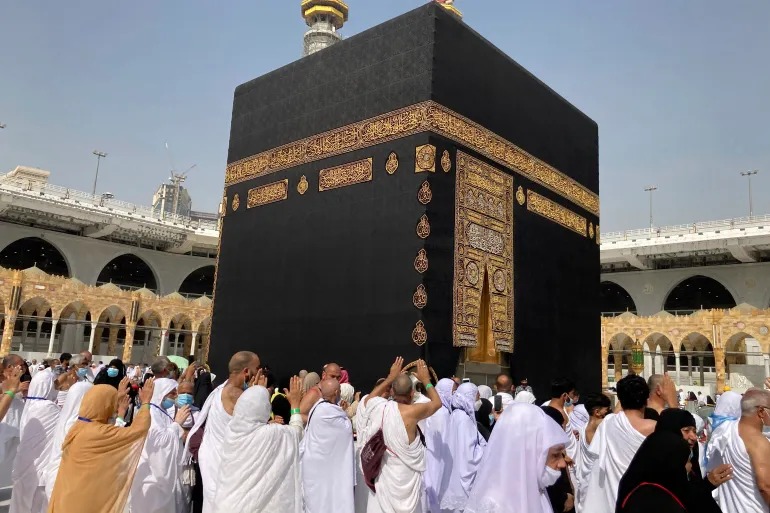
By Zubeida Jaffer
On 24 May 2026, more than 1000 South Africans will enter the vast tented camp of Mina at the start of their Hajj journey. I recall that moment nine years ago when I performed my Hajj. It came as a bit of a surprise when I saw our white tents were a small little piece of a zone set up for Non-Arab Africans.
The exact number housed on any given Hajj year can vary slightly depending on overall Mina capacity limits, tent layouts, and Saudi space‑management rules, but the planned capacity for the Non-Arab African‑countries sector is generally on the order of 150,000–180,000 pilgrims.
Arab African countries like Egypt, Morocco, Tunisia and others are placed closer to Arabic-speaking countries. This year, our country’s allocated number is 1140. For years, we largely remained unaware that we are thrust together with our African Muslims in a sea of devotion. We balance only on our little wave, unaware of how far the other waves around us could take us on our journey of achieving the Islamic commitment to the unity of all of humanity.
As I recall, most of that day was spent in prayer and reflection. The only opportunity to meet women from other countries came when we visited the ablution facilities before sunrise and during the day. It struck me then that those moments were not conducive at all to striking up a good conversation or making an unexpected friend. Most of us make lasting friendships with other South Africans but seldom with pilgrims from other countries, which I have always understood to be part of the exercise.
It occurred to me then that it was a pity that there was not a structured opportunity to hear about Islam in another African country from their women, so that we could increase our understanding and knowledge. We should deepen our understanding of others who are our neighbours on this vast continent, destined to be propelled forward in the coming decades. I understand this to be a Qur’anic obligation.
Then across my desk came the news that former Member of Parliament, Dr Ismail Vadi, has recently launched a research entity to increase our awareness and understanding of Islam in Africa. It gave me such a great pleasure not only to report this on my website (www.zubeidajaffer.co.za) but also to publish in full the inaugural 66-page booklet should you wish to read the initial findings.
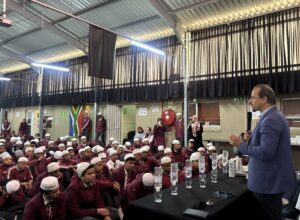
He launched the new research institution, the Centre for Islamic Research – Africa (CIRA), in Johannesburg to deepen understanding of Islam across the continent among South Africa’s two million Muslims.
In the preface to its inaugural booklet, CIRA founder Vadi notes that South African Muslims – just 0.4% of Africa’s estimated 500 million Muslims – know little about their co-religionists in the continent’s 54 nations.
“Continued ignorance of our diverse Islamic history, legacy, traditions, and traits is intolerable,” he said, urging a correction of this “intellectual and spiritual imbalance.”
South Africa’s Muslim community, tracing roots to Indian, Southeast Asian, and indigenous origins, has grown post-apartheid with arrivals from Somalia, Nigeria, Palestine, and beyond. Diverse across socio-economic lines, they form influential middle classes in Gauteng, KwaZulu-Natal, and the Western Cape, he said.
The initiative arrives amid global and African conflicts, positioning South African Muslims to engage broader continental narratives.
According to the booklet, approximately 45-50 percent of Africa’s total population identified itself as Muslim in 2025, with the total population of Africa estimated at approximately 1.56 billion people. This represents about 18.8 percent of the total world population, ranking Africa as the second-most populous continent, second to Asia.
CIRA will research political, economic, social, cultural, and religious trends through an Islamic lens, partnering with organizations continent-wide. The booklet, drawn from open sources, offers a “small step” toward awareness, acknowledging Africa’s predominantly Christian other half.
If I am allowed to dream, perhaps my granddaughter will one day arrive in Mina to perform her hajj and meet other African women forming friendships that will solidify continental unity. Perhaps her generation will understand that we could form part of a sea of devotion in Africa if the waves of Islam and all other faiths seek cooperation. They will stand as a testament to a rejection of separateness that is so fashionable in the world today.