Al-Qalam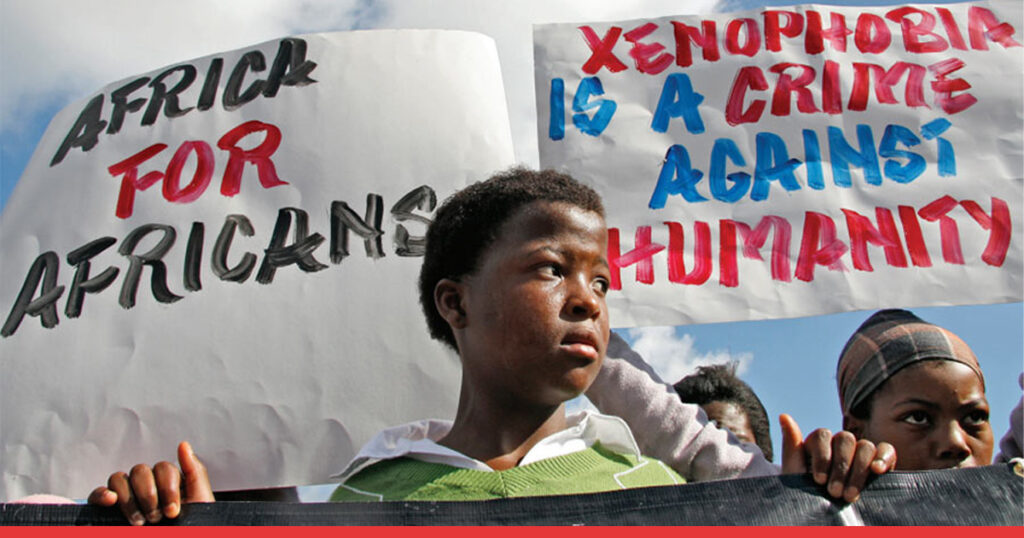
An Islamic scholar, Shaykh Moegamad Amien Jardien, says when a refugee or migrant suffers in Cape Town, in Johannesburg and Durban, we should feel that suffering as our own, Ismail Suder Reports.
Cape Town Islamic scholar, Shaykh Moegamad Amien Jardien, has made an impassioned plea to South Africans to embrace migrants and refugees rather than to gleefully watch the shameful xenophobic attacks against them across the country.
Shaykh Jardien has taken to social media and the mimbar to plead for tolerance and empathy for legitimate foreign nationals residing in South Africa. He also shared his thoughts with Al-Qalam.
“When the refugee suffers in Cape Town, in Johannesburg and Durban, we should feel that suffering as our own. When the immigrant shopkeeper is attacked, it is our own hand that is burned. When the asylum seeker is denied justice, it is our own heart that is wounded.
He said the Prophet (SAW) was himself a refugee who sought refuge in Madina during the Hijrah after facing 13 years of persecution by the Quraysh of Makkah. He said the “strangers”, the Ansar of Madinah, transformed his vulnerability into dignity, his displacement into belonging, and his poverty into prosperity.


“Right now at this moment, South Africans whose forefathers, fathers and brethren have faced colonialism, slavery and apartheid, are about to commit a heinous crime against African migrants who came here looking for a better life. Let us reflect upon one of the most profound lessons from the life of our beloved Prophet Muhammad ﷺ — the Hijrah, his migration from Makkah to Madinah, and the extraordinary generosity of the Ansar who received him and the Muhajirun with open hearts and open hands. This sacred history is not merely a story of the past; it is a living blueprint for how we, as Muslims in South Africa, should respond to the refugees and immigrants in our midst”.
“As Muslims of South Africa, we cannot hear these stories and then turn a blind eye to the refugees and immigrants in our own land. We cannot praise the Ansar while emulating the Quraysh who expelled the Prophet ﷺ and his companions.
“Today, xenophobic rhetoric fills our streets and our social media. Immigrants and refugees are blamed for unemployment, for crime, for housing shortages, for every social ill.” This was mostly not true, he said.
“The Prophet ﷺ taught us that our provision is written by Allah before the creation of the heavens and the earth. So, no human being can take what Allah has decreed for you. The immigrant who opens a shop, the refugee who drives a taxi, the asylum seeker who works in a restaurant — they are NOT stealing your rizq, they are seeking theirs, just as the Muhajirun sought theirs in Madinah.
“In fact, the evidence in South Africa shows that immigrants and refugees are more likely to start businesses than native-born citizens. They create employment not only for themselves but for South Africans as well. Studies has found that immigrant-owned businesses in townships and informal settlements often employ local South Africans, contributing to job creation rather than job loss.”



Shaykh Jardien pointed out that Research by organizations such as the Scalabrini Centre of Cape Town and academic studies on immigrant entrepreneurship have documented that immigrant-owned businesses in South Africa’s townships and informal settlements often sell basic foodstuffs at prices significantly lower than established retailers. This is not because they are “undercutting” unfairly; it is because they operate with lower overheads, longer hours, and a willingness to accept smaller profit margins.
“These migrants are not the cause of unemployment; they are a response to the failure of the formal economy to serve the poor. They are filling gaps that South African businesses have abandoned such as operating in rural areas, informal settlements, and open late-night hours. They are demonstrating to South Africans that with hard work, modest capital, and community trust, prosperity is possible.
Shaykh Jardien told Al-Qalam that many South Africans fear immigrants because they do not know them. He suggested they organize community dialogues, interfaith gatherings, and educational programs that humanize refugees and immigrants. “Let South Africans hear their stories, just as the Ansar heard the stories of the Muhajirun and wept with compassion”.
He added: “Today we stand at a crossroads in our nation’s history. We can choose the path of the Ansar — generosity, solidarity, and faith — or the path of the Quraysh — suspicion, exclusion, and oppression.”