Al-Qalam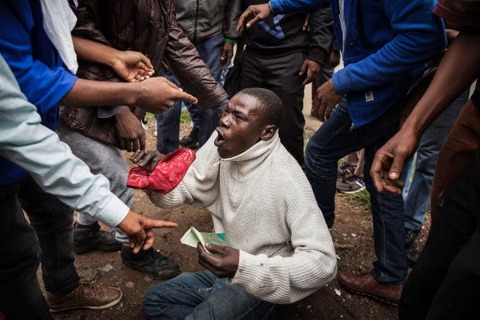
By Ebrahim Rasool (Former Ambassador to the US)
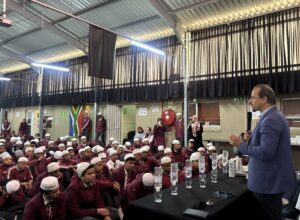
I have just returned from a three-country African Mission with the Humaniti International Foundation. Zanzibar was our first stop, where we delivered paediatric cardiology equipment to detect and diagnose heart defects in children, and will now commence with the requisite training for optimal use. In Tanzania’s Mwanza City we visited a facility in which ‘born too soon’ premature babies (some as small as 800 grams) are given a chance at life; while in war-torn Sudan we inaugurated 10 water distribution points for 5000 Internally Displaced Persons, while caring for orphans whose fathers perished in the war, and starting a process to rebuild the health system for mothers and children.
I provide this travelogue to contextualise, firstly, that I travelled through Africa in the aftermath of perceived xenophobic aggression against other fellow Africans in South Africa, and while Bafana Bafana was playing in the FIFA World Cup in North America. Secondly, I explain my travels to highlight that much of the paediatric equipment and training provided were funded through a Ramadan Campaign conducted in South Africa by Humaniti, and thus South Africans contributed to such health in Africa.
The juxtaposition of xenophobic aggression and humanitarian generosity was surprising, if not confusing, for many of the Africans we met: from high government officials and NGO leaders; to veterans who knew the ANC in Morogoro, Tanzania – and possess memories of children attending a school in Dakawa gifted to Tanzanians by the ANC; to ordinary citizens in a sports bar in Addis Ababa watching South Africa play in the FIFA World Cup; to refugees/IDP’s in Port Sudan.
It was confusing because here was a South African generosity at work – the South Africa many said they know historically – and yet, the images they carried on their devices showed fellow Africans being threatened, given ultimatums, sometimes assaulted, often blamed for South Africa’s problems, caricatured as drug dealers and criminals, and hounded out of communities. This was expected of Donald Trump and his ICE, not the land of Oliver Tambo and Nelson Mandela. What they expected of the inheritors of such great icons was human outrage, principled condemnation, political resolve, and legal protection – not moral equivocation, electoral posturing, and political fragility.
And so, defeat to Mexico was deemed South Africa’s come-uppance for thinking we’re better than other Africans. Some celebrated our defeat for forgetting the sacrifices Tanzanians made to accommodate us when white supremacists hounded us out of SA. Others wished our whole nation was red-carded for humiliating fellow Africans. There was little middle ground, but huge disappointment with great resentment. Other than blaming an impending election and the inevitable pack of populist hyenas who sense a feeding frenzy, what could SA have done better as the frenzy unfolded?


This question made me think back to when I was Premier of the Western Cape and we had the initial sparks by local South Africans against other African Nationals, which by 2008 turned into a national onslaught against fellow Africans. In 2008, the Western Cape had much displacement of African Nationals, but only one fatality, compared to other areas in South Africa. What did we do differently?
Firstly, we were determined not to have intelligence failures, whether in picking up early the signs of disquiet and resentment against other Africans, or in identifying the causes, potential hotspots, or critical figures, while maintaining surveillance on all three.
We convened the intelligence community regularly as an ANC-led Western Cape Cabinet to interpret the dangers in hate speech, the degree of mobilisation, the possibility of orchestration (domestic and foreign), and the probability of hotspots erupting. The question today is how much of this is being done, with what urgency, is intelligence fed to the relevant Minister, and to what extent has the disquiet been placed before cabinet or the President for proactive defusing or real-time combating? But clearly, there has been intelligence negligence along this chain of command.
Secondly, we deployed soft power into the hotspots of Masiphumelele, Joe Slovo, and others in Cape Town to obviate the later use of hard power. We located this soft power into a Unit for Social Cohesion in my office to deal with both intra–South African tensions as well as inter- African ones. The methods included dialogue to find a common definition of the problems and provocations, dealing with economic rivalry through workshops which shared retail insights and collaboration, managing social harmony by regulating the sale, for example, of RDP houses to foreign nationals. Again, these don’t require elaborate national dialogues – they require political will.
Thirdly, we set up early warning systems through our Bambanani EPWP workers responsible for safety in communities. These Bambananis alerted us both to the flaring of hate speech as well as to criminality either by South Africans and other Africans, whether drug dealing or scamming, so that the rule of law could deal impartially and decisively with any crimes from any source to prevent the emergence of a culture of impunity.



Foreign nationals often follow the latitude in boundaries allowed for South Africans to determine their degree of adherence to, or compliance with, the rule of law.
Fourthly, when we were alerted to ‘xenophobic’ flare-ups, we could deploy law enforcement early to prevent rather than combat; to identify and harness the interim infrastructure for temporary shelter; and to ensure a cooling-off period, behind a law enforcement cordon, before attempting reintegration of communities. This cooling-off period was also used to attend to ‘agitators’ who exploited the fears and anxieties of ordinary citizens and they were often working for local shopkeepers or taxis who were threatened by the success of other Africans in business.
Today, we may have to ask more international questions about these hidden hands who have interests in SA being unstable, distracted, and fragmented, given that we are in the crosshairs of powerful forces.
Finally, we remained true to dignity of Africans, and resisted as much as what we could, when the DA-led City of Cape Town created secondary trauma for victims of these attacks and located them on the cold, wet, far-flung beaches of Cape Town, ostensibly for their safety, but certainly at the expense of their dignity and work opportunity. In such cases, ANC leadership had the guts to sit in the sand with fellow Africans as a sign of disagreement with their isolation and solidarity with their plight.
Displaying such moral courage may today be difficult for an ANC electorally besieged and compromised in a GNU. But if we cannot stand on principle in Africa, we accelerate the erosion of our standing in Africa, and we forfeit the trust of even more citizens in SA. We must learn to apply the rule of law as the only antidote to criminality from whichever source. Failure to do so enables the populist political hyenas, the unscrupulous businessperson who fails to compete, and ignites a fire that will consume us.
Ebrahim Rasool is the former ambassador to the U.S. and former premier of the Western Cape