Al-Qalam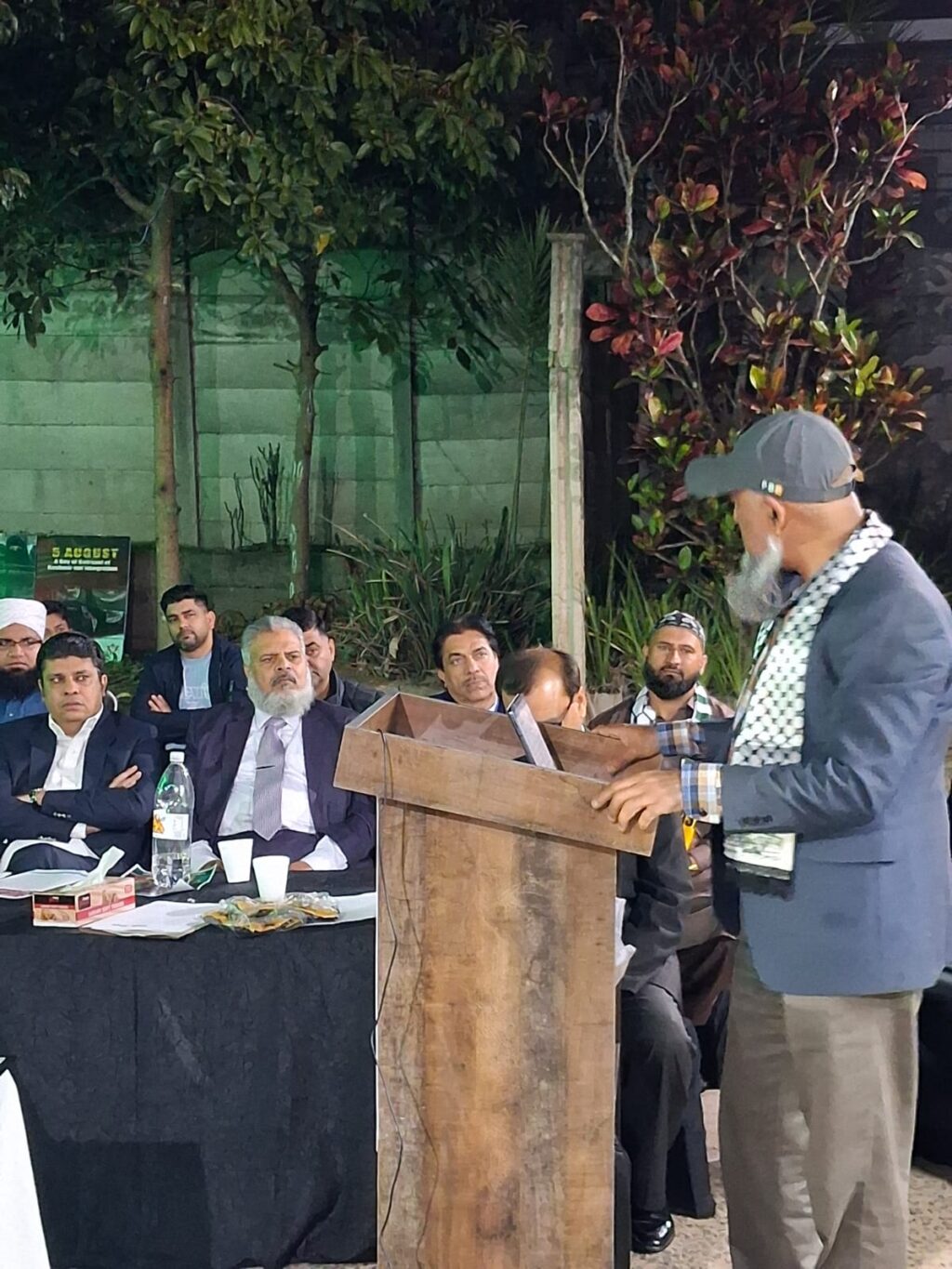
Firebrand ANC MP, Imraan Subrathie addresses local & Pakistani attendees at the Kashmir Black Day event in Durban
By Imraan Buccus
When Indian Prime Minister Narendra Modi attends the G20 Summit in Johannesburg, a backlash could come from those who oppose the illegal occupation of the Muslim-majority states of Jammu & Kashmir.
This week, under a large litchi tree in Durban, the Kashmiri Action Group (SAKAG) and the Kashmir Global Movement, together with the South African Pakistan Movement (SAPM), held a seminar called “Kashmir Black Day” to draw attention to the besieged Kashmiri people suffering under brutal Indian occupation. Kashmir Black Day was held simultaneously around the world to condemn the ongoing militarisation, human rights violations, enforced disappearances, and silencing of dissent in Indian-occupied Jammu & Kashmir.
Modi’s invitation to South Africa is seen as another twist of the knife in the backs of Pakistanis here: it is 78 years – October 27, 1947 – when Indian troops occupied the autonomous mountainous region. Today, there are hundreds of thousands of troops patrolling the region, with many citizens living in fear of being terrorised. The occupation of Jammu & Kashmir is going on as long as the illegal occupation of Palestine since 78-years ago
After his participation in the G20 Summit on November 23, Modi is likely to arrive in Durban the next day to address various communities in Durban.
Salman Khan, founder and chairman of SAKAG, has sent a petition to President Cyril Ramaphosa to raise the question of the illegal Indian occupation of Jammu & Kashmir with Modi when he arrives here.


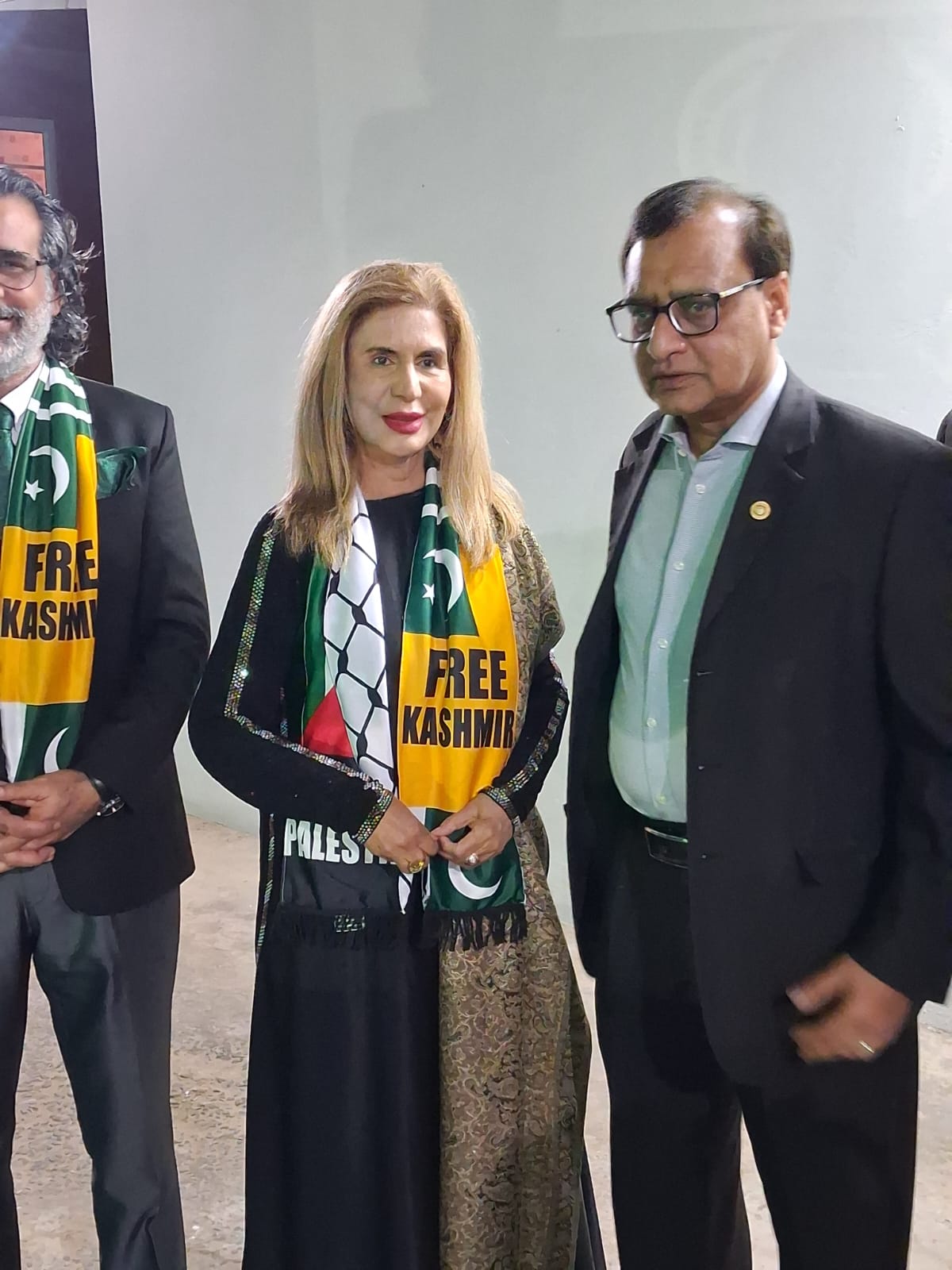
The petition reads: “We commend South Africa’s principled stance and active role in condemning and opposing the Israeli-led genocide and occupation in Palestine — a testament to our nation’s moral consistency in global human rights advocacy. However, we express our deep concern over the current silence regarding the Indian government’s grave human rights violations in Jammu and Kashmir, including extrajudicial killings, arbitrary detentions, communication blackouts, and the suppression of civil and political rights.”
Back at the Kashmir Black Day seminar in Durban, many influential speakers, including members of several political parties, addressed the gathering.
Fowzia Peer, an executive of the ANC-NEC, told the crowd that since the abrogation of Article 370 in 2019, over 800 Indian laws have been imposed in Kashmir, further eroding the region’s identity and autonomy.
“What we witness is not merely political repression — it is, in every sense, a humanitarian catastrophe and one of the worst forms of modern-day genocide.
“Women are being violated, innocent men killed in cold blood, homes reduced to rubble, and generations are growing up knowing nothing but fear and loss. Yet, amidst this tragedy, the spirit of the Kashmiri people remains unbroken.

Dr Ebrahim Khan, a human rights activist, told guests that India felt emboldened by Israel’s genocidal intent and no one – not even resolutions taken at the United Nations – was able to stop them.
“And what makes India so brave is that they have seen how Israel has treated the Palestinian people and that nobody in the world was able to do anything to Israel, so India feels it can repeat the same atrocities that Israel is doing, and get away with it.
Khan said the Kashmiri people must take lessons from the Palestinian resistance that fought the IDF, one of the mightiest armies in the world, and it still could not be defeated.



“The Israelis were unable to defeat the Palestinian resistance and exterminate the Palestinian people. The resistance from the Kashmiri people must be strong, that no matter what the Indians do, no matter how much the Indians humiliate them, torture them, but the power of resistance must never fail – it must continue,” he said.
Former MP, human rights activist and Islamic scholar, Moulana Rafique Shah, said talk-shops won’t move India. What worked to shatter apartheid in South Africa must be implemented in India, such as economic sanctions, targeted sanctions, sport boycotts, shutting the flow of lending by global financial institutions, etc.
“India must not be allowed to hide behind its economic power or political alliances. Yes, we enjoy good ties with India, and there are historic reasons for that – we appreciate that. The Gandhi alliances, sympathies and sentiments are there – and they are true, but we must call upon our own government and remind them that it can’t be that economic interests must always trump human rights consideration because one of the important pillars of South African foreign policy is that it is informed by considerations of human rights. Until those human rights are not given preference over economic stakes and interests, we cannot bring about justice for the people of Kashmir