Al-Qalam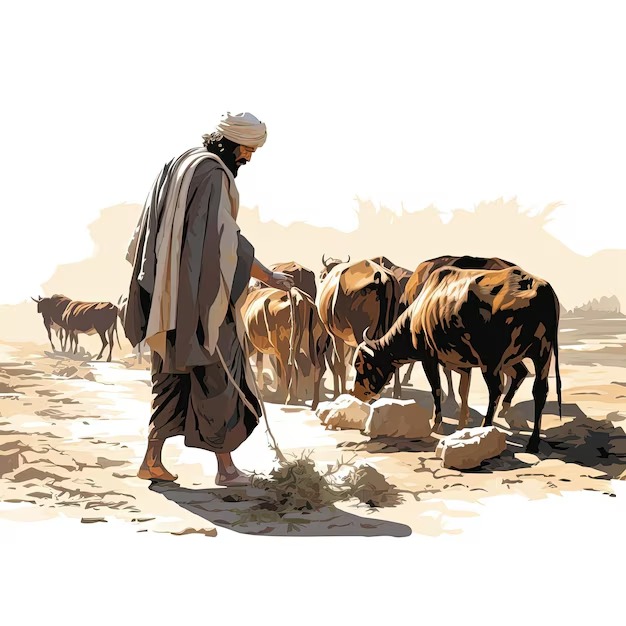
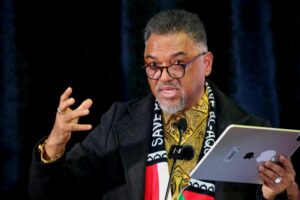
By Ebrahim Rasool (Former Ambassador to the US)
Muslims and politics is often a vexed topic, maybe because it is often misunderstood. In my recent presentation at The Muslim Association of Canada Convention, I addressed the issue, ranging from socio-political activism to political governance and policymaking, and how Muslims play differential roles across various political scenarios.
Necessarily, the need for Muslims, wherever they are, majority or minority, to understand what politics is, to understand the imperative of power, to ensure that management of power should lead to development, rights, inclusion, and, therefore, the betterment of society. The injunction is Quranic (11:61) in that we are obligated to cultivate the earth on which we dwell and from which we emerge.
But the uneven, even conflictual, understanding of politics in a global Muslim community reflects a fraught relationship with politics. Muslims are largely victims within states that have perfected the art of surveillance, exclusion, and autocracy. Sometimes elections could lead to illiberal outcomes, and yet others face a reality of a minority in ambiguity – embracing political democracy, but often subjected to Islamophobia, demands of secularization and assimilation, and suspected of subversion.
Amidst such mixed experiences of politics, South Africa, because of the favourable political condition Muslims are under, are expected to draw on a 350-year evolution from victims of colonialism, segregation, and apartheid to beneficiaries of democracy, human rights, and freedom, to help navigate such conundrums.
However, to avoid simple replication, it is necessary to frame my analysis by probing the common Arabic or Muslim vocabulary for politics, political participation, political governance, and policy development. Drilling down into the word Siyasa, into the etymology of Siyasa, becomes crucial to reorient the Muslim approach to politics.


Siyasa emerges from the practice of animal husbandry, managing livestock as the key to food security, and in turn, as the key to securing livelihoods in fragile and sensitive ecosystems. The practice of shepherding livestock as the precondition for the well-being of people thus lends its name to the very notion of politics! And therefore, the political practitioner is akin to the shepherd with the responsibility to carefully manage a sensitive and fragile resource.
Furthermore, previous conversations with Hassan al Turabi, who is, par excellence, a master of Arabic linguistics, deepen this concept of Siyasa. He adds the dimension of rotation and circulation. Livestock do not graze at the same place – they need to be rotated to prevent overgrazing and the depletion of feed. And therefore, if circulation and rotation are germane to Siyasa, then very clearly they should be germane to the socio-economic and political sphere because you require the circulation and the rotation of wealth, and not its monopolization, as well as parties, political leaders, politicians, governments, and those charged with managing the politics and policies of a country, a community, a nation, and a polity.
The next proposition to be made is that there is not a singular, undifferentiated idea of Siyasa, or political governance, and political activism in Islam. It is largely contextual. Siyasa takes a different form and shape, based on different imperatives at play in different contexts. For me, there are four basic contextual scenarios that shape the objectives and practice of Siyasa, all reinforcing the ultimate objective: The well-being of people, the development of society, the assurance of food security, and the development of the community. The 4 scenarios expand on the metaphor of livestock management.
1. Keep the Wolves Away! The fundamental task of a shepherd is to protect the flock from aggression, imbalance, anything that disrupts the just interaction amongst different elements of the ecosystem. Any greed of the wolves cannot lead to the decimation and insecurity of the livestock. Therefore, when there are threats to the livestock by the wolves, then the responsibility of Siyasa rests on 2 R’s: Resistance, and when the threat is endemic, Revolt, both requiring political activism against injustice, exclusion, autocracy, denial of rights, undue surveillance… through forms of mobilization and organization.
2. Restock and Sow! The transition from conflict creates the imperative of fundamentally restoring the grazing fields and husbanding the new generations of livestock, after the wolves were fought and hopefully defeated. That means that the R’s of providing Relief and starting the Reconstruction are crucial to meeting the challenge of post conflict stabilization and development as the imperative of Siyasa.
3. Cultivate the Land! The transition development is the imperative scenario of Siyasa, where restorative justice starts to take shape, and therefore the cultivation of society needs to take place, institutional resilience against the wolves put into place, and the systemic wherewithal for food security and development instituted. The institutions and systems of governance manifest as Siyasa, whether as majority countries or minority communities, where the R’s of securing Rights, ensuring Representation, and assuming Responsibility for development. The character of Siyasa means its ability to respond contextually and, therefore, to manifest as out and out socio-political activism, to transitional management, where new shoots are being sprouted, to making society work through institutionalization of rights and responsibility for development.
4. Rotate the Shepherd! This fourth scenario emerges out of the third where the institutions and democratic practices are in place. But there may be the need to circulate and rotate the shepherds, as germane to Siyasa. Shepherds have lapses, temptations, are prone to corruption, and can become tone-deaf to the very vulnerable and the very poor. Therefore, there is a need for activism, electoral campaigning, judicial intervention, media investigation, and civil accountability to change the shepherd. The system may not qualify for a revolt or a resistance, but certainly for the R’s – Renewal and Reform.



For a community alienated from politics, the very origin in the Muslim imagination of politics, in the notion of Siyasa, provides a set of metaphors that allow us to understand that not all politics has the same form. We can err when we misidentify the juncture we’re in; but are we confronting wolves or a tone-deaf shepherd? Must we revolt or reform? Is our justice in a transitional or restorative phase? Each choice has an implication for the way Siyasa is practiced.
*Ebrahim Rasool is the former ambassador to the US and former Premier of the Western Cape