Al-Qalam
By Muhammad Zakria
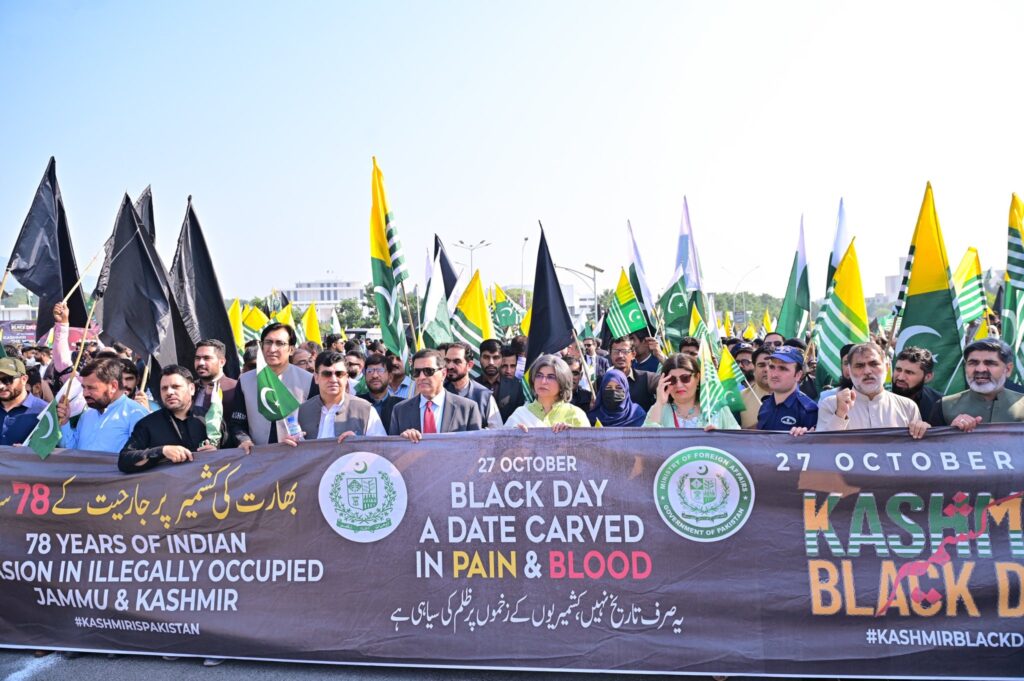
Every year, 27 October is observed as Kashmir Black Day by Pakistan and Kashmiris around the world to remember the events of 1947 and highlight the unresolved Jammu and Kashmir dispute. For Kashmiris, the day symbolises decades of political uncertainty, human suffering and the continuing struggle for dignity, fundamental rights and the opportunity to determine their own future.
On 27 October 1947, Indian troops landed in Srinagar following the signing of the Instrument of Accession by Maharaja Hari Singh. While India maintains that the accession was legally valid, Pakistan and many Kashmiri representatives dispute its legitimacy and argue that the wishes of the Kashmiri people were not adequately considered. The dispute subsequently became a major source of tension between India and Pakistan.
The Kashmir question was brought before the United Nations in 1948, and several UN Security Council resolutions addressed the conflict, including Resolution 47, which proposed measures involving a plebiscite under specified conditions. However, no plebiscite has taken place, and the dispute remains unresolved. For many Kashmiris, the right to participate meaningfully in determining their political future remains a central concern.


Over the decades, the region has experienced conflict, political unrest, security restrictions and allegations of human rights violations. Reports by the United Nations Office of the High Commissioner for Human Rights in 2018 and 2019 raised concerns about alleged abuses, arbitrary detention, restrictions on freedom of expression and accountability. These concerns underline the need to protect civilians, uphold the rule of law and ensure impartial investigations into credible allegations of violations.
Kashmir Black Day is not merely a remembrance of historical events; it is also a call for renewed international attention, peaceful dialogue and a just resolution. India and Pakistan should pursue diplomatic efforts to reduce tensions, while the international community should encourage respect for human rights, accountability and meaningful consideration of the aspirations of the Kashmiri people.



The people of Kashmir deserve a future defined by peace, dignity, security and respect for their fundamental rights. Lasting stability in South Asia requires constructive engagement, adherence to international law and a peaceful approach to long standing disputes. As 27 October is observed, the message remains clear: remembrance must lead to action, human rights must be protected, and the voices and aspirations of Kashmiris must remain central to the search for a lasting and peaceful settlement.