Al-Qalam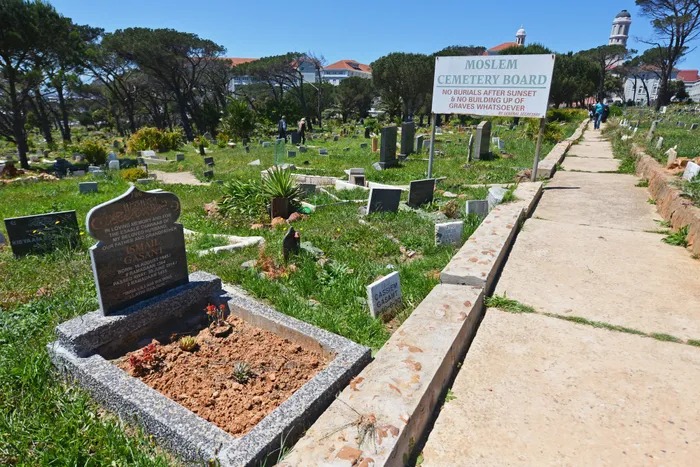
By Fazlin Fransman-Taliep
Cape Town could run out of Muslim burial space within a year, Muslim Judicial Council (MJC) president Shaykh Riad Fataar has warned.
Fataar said the shortage extended across both private Muslim cemeteries and Muslim sections in municipal cemeteries. The burden fell hardest on poorer families, who increasingly have to travel long distances to bury their loved ones as affordable graves closer to their communities become harder to find.
Fataar, who chaired the MJC’s Burial Administration from 2007, said the crisis had been anticipated for more than two decades.
A Metropolitan Cemetery Study undertaken by the City of Cape Town in 2003 identified mounting pressure on burial space across the metro. In the years that followed, the City made space available for Muslim burials at Klip Road and within several municipal cemeteries, including Delft, Welmoed, Maitland, Modderdam Road and Khayelitsha. Klip Road North was developed with space for approximately 3,600 Muslim graves.
Those allocations delayed the crisis. They did not resolve it.


In 2021, the City said its cemeteries were accommodating approximately 150 Muslim burials a month. With COVID-19 having increased demand and the Muslim allotment at Klip Road exhausted, the City created a Muslim burial block at Maitland with capacity for a further 837 graves.
By August 2025, the Muslim allotments at Delft and Muizenberg had also reached capacity, while Constantia had closed to new burials. Families could apply to reopen existing graves at Klip Road, Delft and Muizenberg. The City was considering the same option at Constantia. Space for new graves remained available at several other municipal cemeteries, including Maitland, Welmoed, Rusthof, Modderdam and Ocean View.
According to Fataar, an MJC fatwa allows an existing grave to be reopened after 15 years, subject to strict conditions. The remains of the person already buried there must be protected and the required separation maintained. The family must agree to the reopening, while the City must confirm that the grave can accommodate another burial.
Reopening older graves has extended the life of existing cemeteries. However, it has not replaced the need for new land.
“Not all families want to reopen a grave,” Fataar added.



The MJC has also explored land offered by the private sector. Fataar said some sites proved unsuitable because of the high-water table, while others could not proceed without costly environmental studies that community organisations could not afford.
According to Fataar, the City last provided land for a dedicated Muslim cemetery about a century ago. Since then, it has made burial space available only through Muslim sections in general municipal cemeteries.
Under the Constitution, responsibility for cemeteries rests with local government. In carrying out that responsibility, the Municipal Systems Act requires municipal services to be accessible and sustainable, and regularly reviewed for expansion or improvement. Cape Town’s Cemeteries, Crematoria and Funeral Undertakers By-law allow the City to reserve sections for specific faith communities and require religious burial practices to be considered. It does not, however, require the City to provide a stand-alone Muslim cemetery.
The City’s 2026/27 budget allocates R73.1 million to cemetery upgrades across Cape Town. It is also seeking approval for new or expanded cemeteries in Strand, Kuils River, Mitchells Plain and parts of the southern suburbs. It has not said how much of the proposed new capacity would be set aside for Muslim burials or when it would become available.
Fataar said further municipal sections might provide short-term relief, but would not settle the larger question.
“What we are looking for is something permanent,” he added.
The City’s earlier interventions bought the community time. Fataar’s warning is that time is now running out.