Al-Qalam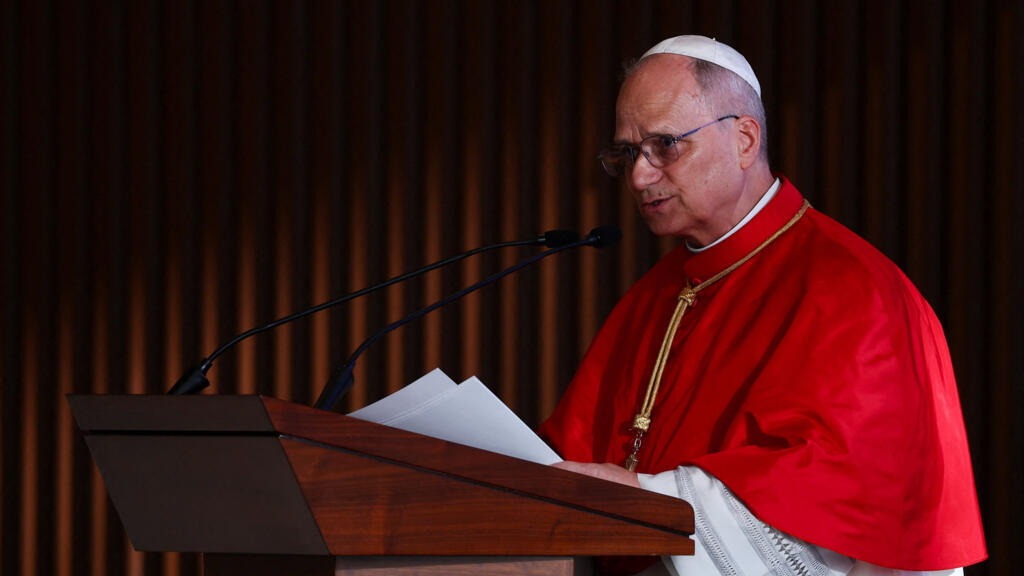
By Imam Dr. A. Rashied Omar
At a moment marked by escalating global tensions and a deepening moral crisis, Pope Leo XIV stands out as one of the few global religious leaders willing to speak with moral clarity against the US/Israeli military campaign against Iran, whose underlying dynamics remain unresolved despite a temporary ceasefire. His principled critique of war, his call for restraint, his commitment to peace with justice, and his unwavering insistence on the sanctity of human life have provoked controversy, particularly among those who view such moral interventions as an unwelcome intrusion into the domain of political statecraft.
From the perspective of Islamic ethics and peacebuilding, however, Pope Leo’s stance is neither surprising nor misplaced. On the contrary, it exemplifies the moral vocation of religious leadership: to speak truth to power, to resist the normalization of violence, and to affirm the primacy of justice and human dignity in the face of unjust war. In moments such as these, silence is not neutrality; it is complicity. Pope Leo’s intervention thus stands as a necessary and principled witness, one that resonates deeply with the ethical imperatives at the heart of the Islamic tradition.
The controversy this has provoked is therefore revealing. At its core is a troubling expectation that religious leaders should remain silent when moral truth confronts oppressive and unjust political narratives and calls into question the legitimacy of state violence and terror. Pope Leo’s intervention offers an unequivocal answer to this misguided expectation. His critique of war, echoing the moral trajectory set by his predecessor, Pope Francis, rejects the normalization of violence and calls into question the enduring legitimacy of “just war” reasoning in an age of devastating military technologies. This position has drawn sharp criticism from those who defend the geopolitical logic of deterrence, security, and pre-emptive force. Yet such criticism misses a deeper moral point.
It is precisely this deeper moral horizon that must inform contemporary religious ethics. In my earlier reflections on Pope Francis’s encyclical Fratelli Tutti, I argued that religious ethics today must move beyond narrow conceptions of charity and embrace a broader commitment to transforming the structural conditions that produce suffering and violence. Peace, in this understanding, is not merely the absence of war, but what peace scholars have described as “positive peace”, a condition grounded in justice, human dignity, and the equitable distribution of resources.
This vision of positive peace resonates closely with the ethical imperative of peace with justice. It calls not only for the cessation of violence, but for the active dismantling of the structures of domination and inequality that sustain it. In this light, opposition to war is not an abstract moral posture; it is a concrete commitment to building a more just and humane social order in which the dignity of all people is affirmed and protected.


From an Islamic perspective, this moral vision resonates deeply with the Qur’anic commitment to justice (ʿadl), compassion (raḥma), and human dignity (karama al-insan) as well as with the Prophetic mandate to establish justice and to resist oppression. The Qur’an issues a stark warning:
“Do not show any inclination toward those who commit oppression and injustice (zulm), lest the Fire should seize you.” (Qur’an 11:113)
This Qur’anic verse is not merely a caution against complicity; it is a moral injunction to maintain ethical distance from injustice and those who perpetrate it. Similarly, the Prophet Muhammad (peace be upon him) elevated the act of moral courage in the face of tyranny to the highest form of struggle:
“The highest form of moral struggle (jihad) is to speak a word of truth in the presence of an unjust and oppressive ruler.”
(The hadith was reported on the authority of Abu Sa`id al-Khudri and found in Sunan al-Tirmidhi and Sunan Abi Dawud)
It is precisely this prophetic ethic that Pope Leo has embodied in his principled opposition to war and injustice. Yet it is at this very point that we must confront a deeply uncomfortable reality. With the notable exception of the Council on American-Islamic Relations (CAIR), the response from major contemporary Muslim institutions and religious leaders to Pope Leo’s principled stance against the unjust, illegal and immoral war waged by the US and Isreal against Iran has been marked by a troubling silence
CAIR, to its credit, issued a statement expressing solidarity with the Catholic community in the wake of attacks on Pope Leo following his moral critique of the war. As it noted, “We stand in solidarity with the Catholic community…” This intervention goes well beyond interfaith courtesy. It reflects CAIR’s unequivocal opposition to the war and, in that light, amounts to a clear and principled affirmation of Pope Leo’s courageous rejection of it as unjust. In doing so, CAIR not only defended the dignity of a religious leader but also aligned itself with a morally grounded stance that rejects the normalization of violence and affirms the sanctity of human life.
By contrast, the relative absence of similar moral clarity from other Muslim institutions raises urgent and disquieting questions about the state of contemporary Islamic leadership and its willingness to speak truth to power in moments of profound moral crisis. This pattern of silence is not incidental.
Elsewhere, I have argued that one of the central challenges facing contemporary interreligious peacebuilding is the extent to which many religious leaders and institutions have become entangled with, or beholden to, state power. In such contexts, speaking truth to power is often discouraged, or even punished, giving rise to a form of religious quietism that prioritizes institutional survival over moral witness. This is particularly evident in regions where religious authorities are state-appointed or operate within tightly controlled political environments. Here, the prophetic voice of religion is often muted, reduced to legitimating the very structures of power that perpetuate injustice.



Against this backdrop, Pope Leo’s intervention stands in stark contrast. It is a reminder that authentic religious leadership is not measured by proximity to power, but by the capacity to maintain moral distance from it. It is about the courage to name injustice, to challenge violence, and to stand in solidarity with the victims of war—regardless of political convenience.
For Muslims, this moment presents both a challenge and an opportunity. It is a challenge to reclaim the rich ethical resources within our own tradition, resources rooted in nonviolence, justice, and moral courage, that have too often been eclipsed by hegemonic interpretations of state power and violence. As I have argued elsewhere, the Islamic tradition contains significant, though underdeveloped, foundations for articulating a robust theology of nonviolence and peacebuilding.
It is also an opportunity to deepen interreligious solidarity on principled grounds. In Fratelli Tutti, Pope Francis invited Muslims and Christians into a shared moral struggle for a more just and peaceful world. I argued then that this invitation should be taken seriously, not as a matter of diplomacy, but as an ethical and spiritual imperative. Today, Pope Leo has extended that invitation through action.
The question before us is whether we, as Muslims, are prepared to respond with comparable moral clarity. To stand with Pope Leo at this moment is not to endorse the totality of Catholic theology or Western political discourse. Rather, it is to affirm a shared commitment to the sanctity of life, the rejection of unjust war, and the moral responsibility of religious leaders to speak truth to power.
In a world increasingly marked by violence, polarization, and the systematic dehumanization of the other, such acts of moral solidarity are not optional; they are indispensable. It is my sincere hope that more Muslim scholars, institutions, and leaders will find the courage to follow the example set by CAIR: to raise their voices, to break the silence, and to stand unambiguously on the side of justice.