Al-Qalam
By Imraan Buccus
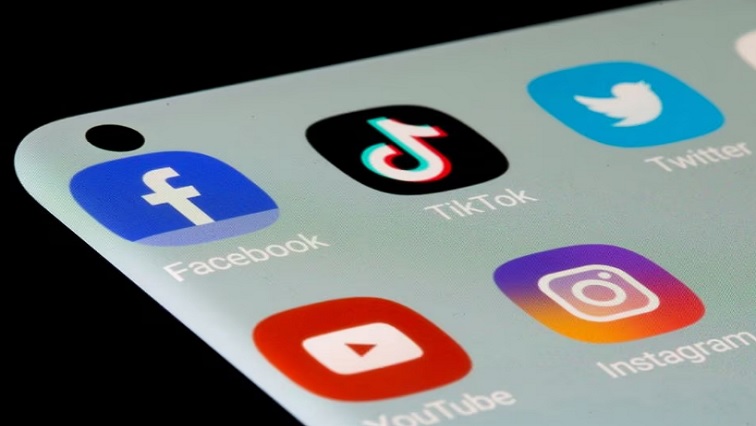
South Africa, like many other countries, is moving to the right at dizzying speed. As in the United States, Australia and Europe, the key issue being used to push society to the right has been xenophobia. The key mechanism to achieve this has been social media.
Now, following the playbook of the international right, the xenophobia that has been manufactured in South Africa is rapidly turning into Islamophobia. And, as we see elsewhere, this is being achieved via the use of social media.
The active cultivation of xenophobia and now Islamophobia via social media has already had disastrous results. At least 150,000 people were forced out of South Africa in a few weeks in June, inflicting huge suffering and doing massive damage to the country’s international reputation. Documented people, including refugees, have been systematically targeted. We are now in a situation in which a mob can beat a man to death in central Durban with what appears, thus far, to be impunity. As well as being a horrific descent into social barbarism, this kind of thing also destroys South Africa’s credibility to speak and act against the genocide in Palestine.
Now that a vicious form of Islamophobia is being cultivated by the same social media accounts and personalities that drove the xenophobic project, the widespread support for Palestine in South Africa can only be weakened. At the same time, the inclusive vision of the national liberation movement, and then the constitutional order, is under direct attack. If the online project to incite Islamophobia has the same success as the xenophobic project, Muslims will soon be in the same kind of position that Muslims face in India and much of Europe and the US, a position in which de jure citizenship is undermined by de facto exclusion, with the result that Muslims must keep a low profile and remain outside of public debates.


In this dangerous and rapidly escalating situation, it is imperative that we all understand that xenophobia did not become a key issue in South Africa via organic public sentiment. It was actively created online via a network of paid influencers, bots and fake accounts. This has been well documented. That same network is now starting to drive a coordinated Islamophobic project, with the ridiculous manufactured online panic about halal food being the latest move in the game.
The social media campaigns that have moved South African politics hard to the right, even to fascism in some cases, include a strong paid element. There are all kinds of rumours about who is paying for it. These rumours range from foreign states to local billionaires and political parties, but none have been confirmed by empirical evidence.
It is vital that the media rigorously investigate who is driving and paying for this online campaign. It is also incumbent on state intelligence to do the same, given that it is now a direct attack on the Constitution and social cohesion. It is also essential that we look at regulating social media to preclude brazen lying, incitement to violence and hate speech.
In this regard, we could learn a lesson from Brazil. While the right – often fuelled by xenophobia and Islamophobia – is storming ahead in much of the world, the left has triumphed in Brazil against the far right, backed to the hilt by Donald Trump. Like other right-wing extremists around the world, Flávio Bolsonaro largely built his campaign through disinformation on social media.
On 14 October, ahead of the second round of voting on 25 October, Lula’s campaign took legal action against Meta, the US technology giant that owns Facebook, Instagram and WhatsApp, for manipulating its algorithms to restrict the circulation of Lula’s election material while favouring his far-right opponent. The Lula campaign also showed that Meta’s artificial intelligence tools permitted the generation of campaign material supporting Bolsonaro while blocking similar material for Lula. On 15 October, Brazil’s Superior Electoral Court ordered Meta to treat the candidates equally.



The legal challenge to Meta raised fundamental questions about democracy and digital sovereignty. When a handful of immensely wealthy US corporations control much of the digital infrastructure through which billions of people communicate, organise and participate in politics, they acquire extraordinary power over democratic life without corresponding democratic accountability.
This judgment won by the Lula campaign was a significant moment, but far more can be done to regulate social media. We cannot have a situation where the old forms of media – newspapers, radio, etc. – are regulated by the law and professional norms and standards while people can freely spread fake news, incite violence, defame others and even make open death threats on social media.
There are a number of examples of progress towards democratic regulation. One is the European Union’s Digital Services Act, which came fully into force in February 2024. It requires major platforms such as Meta, X and TikTok to address illegal content, including unlawful hate speech and defamation, assess and reduce the risks of disinformation and electoral manipulation, and make their algorithms and content moderation practices more transparent. Companies that seriously violate the law can face fines of up to 6% of their worldwide annual turnover. Crucially, the legislation seeks to hold powerful technology corporations accountable while protecting freedom of expression, rather than giving governments unrestricted power to determine what people can say online.
There are principled people holding a line against the online cultivation of xenophobia and Islamophobia, including Zwelinzima Vavi, Redi Thlabi and Phumzile van Damme. There are also various NGOs and social movements that hold the line.
But while these people and organisations deserve our respect, gratitude and support, we need structural intervention to subject social media to democratic regulation. If we do not rapidly move to regulate social media, our constitutional democracy, founded on the principle that South Africa belongs to all who live in it, will soon be corroded from within in the same way that secular democracy in India has effectively been destroyed.
*Dr Imraan Buccus is editor of Al-Qalam.