Al-Qalam
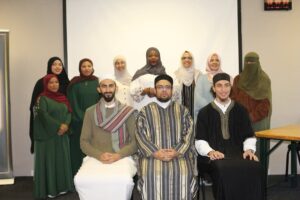
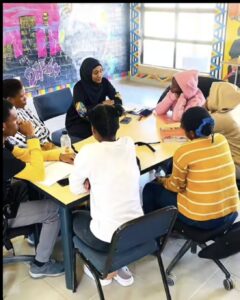
[Photo: Islamic Relief’s Open Day at Exotic Conference Centre, Durban - calling on the community to rise as “Changemakers”.]
By Azra Hoosen
There was a spirit of purpose at a recent Changemakers event in Durban where students, parents and professionals gathered with one goal – to make a meaningful impact in the lives of the less fortunate in the community.
For Farhana Malek, Regional fundraising manager for Islamic Relief South Africa (IRSA) in KZN, becoming a changemaker is a deeply human responsibility that anyone, young or old, can fulfill.
Whether it is disaster relief, youth mentorship, elder support, or simply showing up with a helping hand, the message from those working on the ground is clear: building stronger communities starts with ordinary people choosing to care. “People often forget, we do just as much locally as we do internationally. The need here is just as urgent,” said Malek.
Raeesa Sayed, IRSA regional volunteer coordinator, told Al-Qalam that there is a significant gap in our communities when it comes to youth involvement. “We need to raise a generation that doesn’t only ask, ‘What can I get?’ but also, ‘What can I give?’” she said.
Sayed believes this responsibility does not rest solely on the shoulders of the youth; it is intergenerational. “Many volunteers have different personality traits and experiences that come in handy. When we have a diverse team, we work better and come up with more innovative ways of helping,” she said.
A significant shift Malek wants to see is how people view charity itself, not as a one-sided act of giving, but as a shared human experience. “We need to change our mindset that we are giving charity and we are helping others. They’re helping us, because those are our steps to Jannah (paradise),” she said.
Sayed stressed that the spirit of giving does not only take the form of money. “People can contribute with time, skills and presence. For those who say they don’t have time or anything to offer? You can give back in different capacities, on weekends, during holidays, even from home,” she added.
For one young volunteer, humanitarian work began as a way to fill a gap year after high school. But it quickly became something deeper, a window into the world beyond her own. “We don’t realise how much we have until we see how little others live with. You go to a shelter and see people fighting over a peanut butter sandwich. That stays with you. It makes you want to do more,” she said.
Through her journey, she has come to see charity not as an occasional act, but as a way of life that can and should start at a young age. “If you make time for others early on, it becomes part of who you are. We need more people who are compassionate and selfless in this world,” she said.
Malek encourages parents to lead by example, to involve their children in outreach efforts and use service as a teaching tool. “You have to be what you want your children to be. I take my children with me when we’re giving out hampers or mattresses, and when there are natural disasters. We shield our children too much. They need to see what real life is about,” she said.
Those on the frontlines urge the community to start small: “Even if all you can give is a loaf of bread or a kind word, that’s enough. You just need to start.”
“When I am in the field and I see a smile on someone’s face, I know we’ve made a difference. That’s what keeps me going,” said Sayed.