Al-Qalam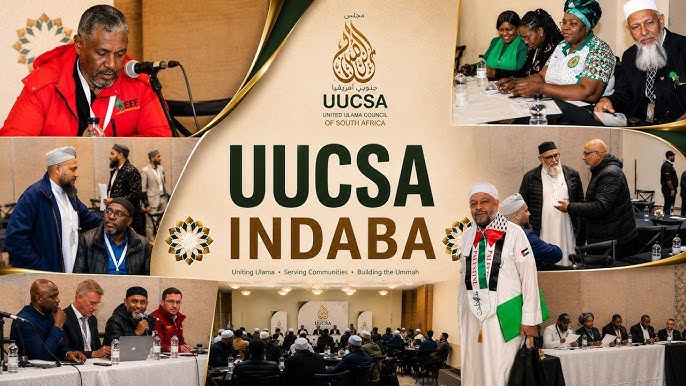
By Al–Qalam Reporter
The United Ulama Council of South Africa (UUCSA) has hailed the success of its three-day Municipal Elections Indaba, describing the gathering as a significant milestone in strengthening civic participation and political engagement.
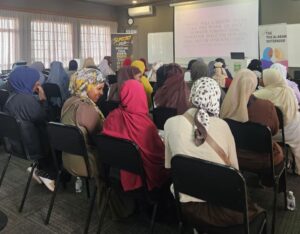
Held in Johannesburg, the Indaba brought together delegates from across the country, including members of the Ulama fraternity, Muslim representative bodies, business leaders, professionals, academics, civil society organisations and community stakeholders. The event formed part of the work of the UUCSA Political Committee, a broad-based platform established to facilitate structured engagement between the Muslim community and public representatives on matters of governance, policy and public interest.
Over the course of the Indaba, delegates engaged directly with senior leaders and representatives from six political parties in a series of robust discussions centred on the Muslim Civic Consensus document – a policy framework developed through extensive consultation processes within the Muslim community.
The document outlines approximately 50 policy positions on issues ranging from youth unemployment, corruption and crime to economic inclusion, online gambling, infrastructure decay, heritage preservation, and South Africa’s position on the genocide in Gaza and the broader Palestinian question.


UUCSA said the engagements were designed to promote informed civic participation and ensure that the concerns of Muslim communities are articulated within South Africa’s democratic processes.
“The Committee brings together representatives from the Ulama, Muslim organisations, business, professional sectors, academia and civil society to develop consensus positions on key national, provincial and local issues affecting South Africans,” the organisation said in a statement.
The Muslim Civic Consensus has been made publicly available through UUCSA, which has encouraged South Africans to engage with the document and contribute recommendations relevant to their communities and municipalities.
UUCSA reiterated its non-partisan position, emphasising that it serves as a facilitator of dialogue rather than an endorser of any political party.
“As part of the next phase of this process, UUCSA intends facilitating similar engagements with regional, local and community-based political formations to ensure that issues affecting municipalities and local communities receive focused attention,” the statement noted.
The organisation also announced plans to partner with Muslim media institutions in launching a voter registration awareness campaign across Johannesburg, Durban and Cape Town ahead of the upcoming municipal elections. The initiative aims to encourage greater democratic participation and voter engagement.
In addition, UUCSA plans to convene a panel of Muslim political analysts and subject-matter experts to assess political parties’ responses to the Muslim Civic Consensus. The findings will be published as a public scorecard to assist Muslim voters in making informed electoral decisions.




Among those attending the Indaba was Ebrahim Patel, Head of the Minara Chamber of Commerce, who highlighted several key outcomes. He noted that the South African Muslim community had demonstrated its diversity and unity, transcending race, language and cultural backgrounds while remaining firmly rooted in faith.
“The South African Muslim community is soundly patriotic to the country. We are not a minority – we are South Africa,” he said.
Patel also stressed the importance of active civic participation, arguing that meaningful political influence can only be achieved through engagement with political institutions and participation in policy discussions.
“The only way to influence politics is to be part of the process, engaging the political and functional organs of state and participating in dialogue on various ideas and policy influence.”