Al-Qalam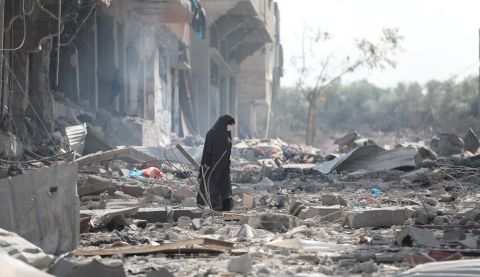
By Neelam Rahim
A Palestinian mother of two who fled the Zionist genocide together with a plane load of other refugees late last year says she is most grateful to have been warmly welcomed to South Africa, but she yearns for the soil of Gaza.
Many of those who arrived have had to do so quietly, relying on community networks, particularly from within South Africa’s Muslim community.
Al-Qalam spoke to one Palestinian woman who requested to remain anonymous. Let’s call her Nadira.
Nadira says her life, despite hardships, was rooted in purpose and identity.
“I am Palestinian from the Gaza Strip. I grew up there and experienced everyday life filled with resilience and challenges. I studied journalism, got married, and have two children. I carry with me a deep connection to the place, my family, and the memories that have shaped a large part of my identity and who I am.”
Leaving, she explains, was not a decision made freely.


“The circumstances that forced me to leave Palestine were difficult and complex. It was the war of genocide, the constant fear of death, and the absence of all basic conditions for life. It was a painful decision, but it came in search of safety and an opportunity for a new beginning where I could continue and build a future for myself and my children.”
For many Palestinians in Gaza, daily life has been shaped by ongoing conflict, uncertainty, and the erosion of basic living conditions. For civilians, particularly families, the decision to leave is often not about choice, but survival.
Arrival in South Africa brought both relief and emotional strain. “The moment I arrived in South Africa was a mix of conflicting emotions. I felt relief at being in a safe place, but at the same time, there was deep sadness and longing for everything I had left behind. My first impression was that the country is diverse, culturally rich, developed, and its people are kind, but I felt a sense of alienation at first.”
Adjusting to a new country, she says, has been neither quick nor easy. “Adjusting to life here has been gradual and not easy. The hardest part has been being away from my family and sometimes feeling lonely, as well as trying to integrate into a new society with different customs. Over time, I began to understand the environment better and gradually adapted.”
Separation from loved ones remains one of the most difficult aspects of rebuilding life in a new country.



At the same time, support from local communities has played a meaningful role in easing that transition. “Yes, I have received beautiful support from the local community, especially the Muslim community, psychological, moral, and also guidance to better understand the nature of the country. This has helped me continue and feel that I am not alone.”
Across South Africa, similar acts of support have helped many who arrived begin to find stability, even in the absence of formal systems.
For Nadira, that sense of belonging is still taking shape.“I do feel that I am gradually developing a sense of belonging here. The country is kind and its people are welcoming, but it does not take away my original belonging to Palestine, my homeland. I hope people understand that behind every migrant there is a story full of challenges and sacrifices, and that the journey was not an easy choice but a necessity imposed by the harsh conditions in my country. South Africa has been a safe haven and a place of refuge for me, and I hold it in great appreciation