Al-Qalam
By Mphutlane wa Bofelo
One of the enduring lessons of South African electoral politics is that once a political organisation enters a sustained downward electoral trajectory, reversing that decline becomes extraordinarily difficult. Electoral decline is seldom merely a consequence of temporary dissatisfaction. More often, it reflects an erosion of public trust, political credibility and confidence in an organisation’s capacity to respond to the aspirations of its constituency.
The experiences of the ANC, COPE, the EFF and the DA illustrate different dimensions of this challenge. The ANC’s declining electoral support demonstrates the consequences of prolonged governance failures and a crisis of credibility. COPE’s impressive 2009 electoral breakthrough was undermined by factionalism and organisational instability. The EFF’s experience raises questions about personality-driven politics, internal democracy and political responsiveness. The DA, meanwhile, continues to face challenges in expanding its appeal beyond established demographic and ideological constituencies.
A common lesson emerges: electoral support is not a permanent political asset. Organisations must continuously earn public confidence through integrity, accountability, internal democracy and responsiveness to changing social realities.
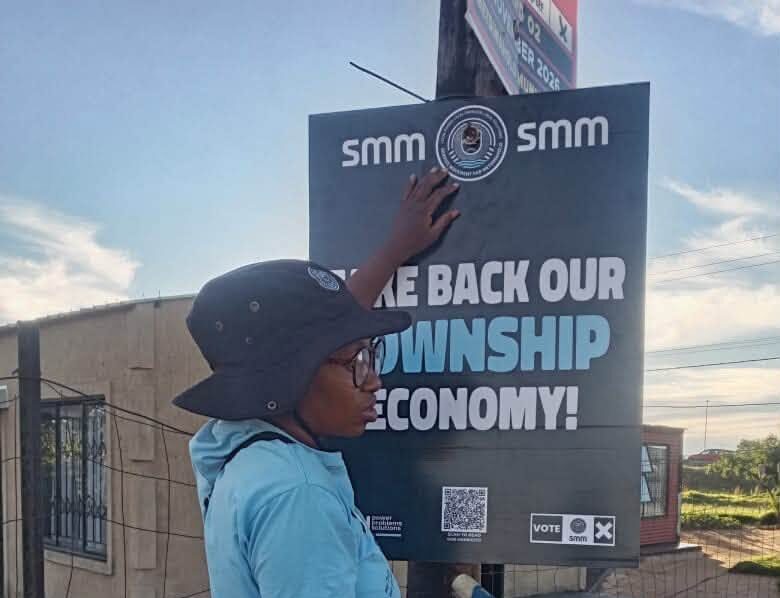
This lesson is particularly relevant to the Service Movement for Metsimaholo (SMM), whose performance in the 2026 local government elections presents an opportunity to redefine local politics.
SMM’s emergence has offered a different possibility: citizen-centred governance, participatory democracy and meaningful community involvement in determining municipal development priorities. Its stakeholder-driven manifesto development and ward-specific development priorities represent an important departure from conventional electoral politics.
However, its electoral breakthrough is not the culmination of its political project. It is the beginning of a much more demanding test.


The coalition dilemma: Beyond political convenience
The provisional 2026 election results indicate that the 46-seat Metsimaholo council comprises the ANC (17), DA (11), EFF (5), SMM (5), FF+ (3), and five smaller parties with one seat each. An outright majority requires 24 seats. SMM’s five seats therefore place it in a potentially influential position.
Several governing arrangements are possible.
A grand coalition involving the ANC, DA, EFF and SMM would command 38 seats. Numerically, this offers considerable stability and broad political representation. However, it raises questions about ideological contradictions, competing political ambitions and whether SMM could retain its distinct political identity within an arrangement dominated by established formations.
An ANC-EFF-SMM coalition would command 27 seats, while an ANC-DA-SMM arrangement would have 33. Both offer comfortable majorities, but would require SMM to explain how its participation advances its electoral commitments and what safeguards would prevent it from becoming an appendage of larger political organisations.
Equally, an ANC-excluding arrangement involving the DA, EFF, SMM and FF+ would command exactly 24 seats. This could provide an opportunity to demonstrate that Metsimaholo can be governed without ANC participation. However, the ideological differences between these organisations and the absence of a numerical cushion make this a potentially fragile arrangement.
The point is that neither including nor excluding the ANC should be treated as an ideological principle that overrides all other considerations. The relevant question is which combination of political organisations can credibly deliver accountable, competent and sustainable municipal government.
The possibility of remaining in opposition
SMM should also seriously consider remaining outside the executive. There is an unfortunate assumption in electoral politics that securing council seats creates an obligation to pursue executive positions. Yet participation in government should be a means of advancing political objectives, not an end in itself.
Remaining in opposition would preserve SMM’s independence and allow it to scrutinise municipal expenditure, challenge maladministration, monitor service delivery and hold the governing coalition accountable.
Alternatively, it could support a minority governing arrangement on an issue-by-issue basis, assessing budgets, the Integrated Development Plan and other municipal decisions according to their merits.
This would allow SMM to influence governance without assuming collective responsibility for an executive over which it has limited control.
However, opposition must be constructive. SMM should support initiatives that advance residents’ interests while challenging those that undermine accountability, transparency and service delivery.



What should determine SMM’s choice?
SMM should approach coalition negotiations without predetermined political exclusions or unconditional commitments.
Prospective partners must be assessed according to six considerations: political maturity, leadership integrity, administrative competence, commitment to participatory democracy, respect for the electoral mandate and willingness to maintain a stable governing arrangement.
Negotiations should revolve around an enforceable programme of action, measurable development objectives and mechanisms for resolving disputes. The distribution of mayoral, speaker and MMC positions should be secondary to these considerations.
Importantly, ideological differences should not automatically disqualify potential partners. Political cooperation does not require ideological conformity. Equally, historical political affinities should not excuse conduct that contradicts SMM’s founding commitments.
The organisation must distinguish between political compromise that makes effective governance possible and political surrender that compromises its identity.
The defining choice
The history of South African politics is littered with organisations that emerged from popular dissatisfaction, promised a different political culture and eventually reproduced the practices they had criticised.
SMM must guard against becoming another such example.
Its greatest political asset is not simply its five council seats, but the confidence of residents who believe that local government can be organised and administered differently.
The real strategic choice is whether SMM wants merely to become another political party seeking access to municipal power or whether it wants to become a movement committed to fundamentally changing how that power is exercised.
These objectives are not necessarily mutually exclusive. However, the latter must inform the former.
The best coalition is not necessarily the one with the largest numerical majority, the closest ideological affinities or the most attractive distribution of political positions. It is the one that offers the greatest prospect of translating the electoral mandate into ethical, competent, accountable and sustainable local government.
If an ANC-inclusive arrangement can demonstrably meet these requirements, it should not be dismissed simply because of historical political antagonisms. Equally, an ANC-excluding arrangement should not automatically be embraced if its constituent parties cannot demonstrate the political maturity and governance capacity required to make it work.
And if no coalition can offer credible guarantees of responsible governance, remaining in opposition may be a greater demonstration of political maturity than entering government at any cost.
The people of Metsimaholo did not simply vote for five councillors. They voted for the possibility of a different political and governance culture.
SMM must negotiate for good governance, not positions; for a programme of action, not political patronage; and for the long-term confidence of residents, not the short-term rewards of political office.
*Mphutlane wa Bofelo (Ibrahim Mphutlane wa Bofelo) is a South African poet, essayist, social critic, cultural worker, and socio-political theorist