Al-Qalam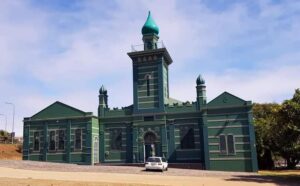
As Musjid-ul-Aziez turns 125, we must not forget the sacrifices of a community that fought to save it – even if it might have cost some their lives, Ismail Suder reports.
When the historic Musjid-ul-Aziez in Gqeberha (Port Elizabeth) was threatened with demolition to make way for a freeway in 1970, many congregants threatened to “fast until death” to save the mosque – but sense finally prevailed – the freeway was rerouted and the masjid saved.
Today, the beautifully preserved mosque named after the Ottoman Sultan Abdul Aziz will this year celebrate 125 years since its official opening on July 27, 1901 – it was constructed at a princely cost of 1345 British pounds.
Also known as the Pier Street Mosque, this green-shaded architectural marvel in the South End area, is a sight for sore eyes amidst the gray of the harbour industrial complex.
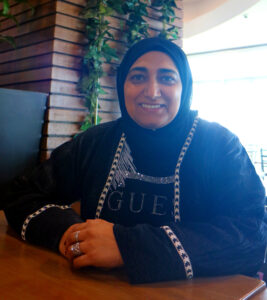
Salie Abrahams, one of the trustees of the mosque, is passionate about welcoming musalees to the musjid. When this reporter visited Musjid-ul-Aziez at Jumuah whilst on a 5000km road trip around South Africa, he spotted Abrahams warmly welcoming everyone at the entrance.
The freeway that would have bulldozed this beautiful mosque, had thankfully been diverted via an overhead circular bridge – just 300m short of the mosque.


“Although, we don’t hear the sounds of the motoring traffic, we unfortunately can’t get rid of the loud noises of the passing trains that trundle right past the musjid carrying iron ore. At times, the trains do cause disturbances during salah, but we’ve learnt to live with it, Alhumdulilah,” Abrahams says smilingly.
He tells Al-Qalam that with tons of iron ore being transported each day, soot coats the walls of the mosques, thereby requiring maintenance, and regular painting.
The musjid had faced many struggles in its history. According to historical records, the South End area – where Musjid-ul-Aziez is located – was declared a “Whites Only” district in 1963 and scores of families were uprooted in terms of the dreaded Group Areas Act. The evicted Muslim families were not only up in arms over their forced removal, but they were seriously concerned about the destruction of their Musjids.
While musjids in the area survived the “Group Area” bulldozers, trouble loomed when in 1970, the Port Elizabeth Municipality decided to build a freeway that would go right through the land on which Musjid-ul-Aziez stands.
For 18 months, the community rallied to vehemently oppose the destruction of this historic musjid. There were numerous public meetings, protests were held and legal battles were fought to stop the potential demolition.
The ulama of Port Elizabeth at the time, Imam Igsaan Nackerdien, Moulana Ahmed Sadek Desai, Sheikh Jamiel Jardien as well as religious leaders from around the country stood strongly to prevent the demolition. “The matter raised such an outcry that it was even taken as far as a meeting at the United Nations,” according to records.
According to an abstract from the book, “The Big Five Masjids of Port Elizabeth”, the imam of the Cape Peninsula at that time, Shaikh E. Behardien, informed the Group Areas Board in Cape Town that when a musjid had been built and the ground “dedicated to the service of God,” it could never be desecrated.



“The Sheik warned the Group Areas Board of international complications that would eventuate if any steps were taken to alienate a musjid. He further stated that a musjid could never be destroyed, nor the land on which it stood be used for any other purpose. He informed them that he was busy consulting Muslim leaders from all parts of the world and asked the Government to do the same.”
With the municipality determined to go ahead, many Muslims decided they would rather die than allow the bulldozers to crush the mosque to dust. While the bulldozers waited outside, some of the congregants decided they would “fast till death” rather than give in to the demolition gangs. Their firm stand paid off and the authorities gave up on the idea.
The Government finally conceded and allowed Musjid-ul-Aziez to remain but demanded that the minaret had to be removed as they planned to build the freeway above the musjid. The Muslim community begrudgingly agreed and brought down the minaret.
The authorities eventually decided to reroute the freeway, much to the joy of the community.
If you ever happen to visit the musjid, you will see the truncated piece of freeway that stops short of the musjid. It reminds everyone about the many battles fought – and won!