Al-Qalam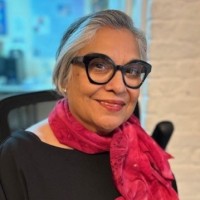
By Azra Hoosen
When Sabra Desai – formerly of Port Shepstone – first enrolled for her PhD in 1989, she could not have imagined it would take 36 years to complete.
Life intervened and the PhD was put on hold; however, in 2025 – at the ripe age of 75 – she returned to that unfinished chapter and completed her doctorate.
Desai, who permanently settled in Canada, has worked at the intersection of social justice, education and community healing long before the title “Dr” preceded her name.
“It’s never too late. Believe in yourself, have faith and take that first step – you never know where it might lead,” she advised.
For over 30 years, Desai has served as a social worker, psychotherapist, educator and advocate – working with vulnerable youth, supporting survivors of family violence and pushing institutions to be more just and humane.
Born in Port Shepstone, KwaZulu-Natal, Desai grew up during apartheid in what she describes as a “loving, values-driven home.” Her parents, Ahmed M.K. Desai and Ayesha Rawat, though not wealthy, made sure their children never felt deprived. “My parents were resilient, resourceful and deeply committed to education. They ensured we never experienced ourselves as poor, teaching us dignity, hard work and trust in Allah’s provision,” she said.
She said her family in KZN is proud of her achievements, and if Allah wills, she would possibly return to South Africa.
“I am from a family of six children, four brothers and two sisters. Currently, with our eldest brother, Marhoom Mohammed Iqbal, deceased in 1994, we are three brothers, Yousuf, a surgeon; Suleman, a businessman; Moosa, a physician, and our youngest sister, Fathima, also a businesswoman.”


Her parents modelled a simple, compassionate Islam, rooted in the five pillars, lived as a way of life, never as a burden. As a young girl, Desai was exposed to stories about Nelson Mandela, Fatima Meer and Ahmed Kathrada. “This shaped my interest in psychology and sociology, grounding it in an enduring curiosity about human behaviour, resilience and the social conditions that shape our lives,” she said.
Desai left South Africa in 1970, believing freedom could only be realised elsewhere. Having settled in Canada, however, she discovered a different landscape of injustice. “Experiencing systemic racism in both contexts sharpened my commitment to social justice education and shaped my scholarly path,” she said.
Her career unfolded across universities and community spaces. While she completed her comprehensive doctoral exams in psychology, Desai postponed her dissertation for many years, earning the designation ABD. During that time, she built a long-standing career as a social worker, psychotherapist and educator.
She taught at York University, Toronto Metropolitan University and Humber Polytechnic, focusing on equity, human rights and access to postsecondary education, particularly for “marginalised and disengaged youth.” She was also involved in developing institutional initiatives related to human rights, Indigenous engagement and mental health capacity building.
A published author and poet, Desai has consistently worked to connect theory with practice. She seeks to “bridge academic inquiry with real-world impact,” emphasising empowerment, dignity and community healing.
In 2025, Desai completed her PhD in Social Justice Education at the University of Toronto. She described this achievement as “clarifying her purpose.”
“My understanding of success and achievement has shifted from earning the degree itself to the impact I can now work toward. My definitions of success, achievement, and purpose continue to evolve as I begin this next phase,” she said.




Her academic journey was not without struggle, facing moments of doubt, exhaustion and delay. “My faith was a quiet but constant source of strength. There were times when circumstances were beyond my control, and others when my own choices led to thoughts of giving up,” she said.
Turning to Allah through surrender, istikhara and prayer sustained her. Desai drew inspiration from Surah Al‘Alaq and the reminder that “Allah raises those who have faith and knowledge in rank” (58:11).
“While I could not always change my situation, I could choose how to live through it,” she added.
Looking back, she describes the PhD as “both a test of the nafs and a deeply fulfilling experience.”
While based in Canada, Desai remains committed to improving life outcomes for children and youth. She hopes her research will contribute to reforms grounded in dignity, belonging and empowerment.