Al-Qalam
Famous UK journalist, author and activist Dr Yvonne Ridley, who was captured by Israeli forces while sailing on the Samud Flotilla to Gaza, visited Durban as part of her SA tour. Zaynab Khan caught up with her.
What inspired your activism?
The start of the genocide in Gaza made me realise that despite years of activism, things had gotten worse. People worldwide felt the same, which is why so many demonstrated. World leaders may have thought we’d tire, but the demonstrations have grown bigger and louder, and that momentum continues.
How did you first connect with the Palestinian cause?
At 13, a Palestinian woman asked me to sign a petition. I thought, these people hijack planes—why support them? She asked, ‘Do you know our story?’ She told me about the Nakba, and I was shocked. Reading more, I realised Palestinians needed help. Initially, I thought it was like apartheid South Africa – winnable—but over 50 years later, it’s become a genocide.
How does apartheid in Palestine differ from South Africa?
South Africans weren’t facing Apache helicopters or tank shells. It was bad, but not as concentrated or vicious as in Palestine.
What did “Sumud” mean to you during the voyage?
I identified with Sumud – steadfastness – but even more with the boat’s name, Omar al-Mukhtar. He was a revolutionary, everything I aspire to be as a human being.
Is the Israel-Palestine conflict religious in nature?
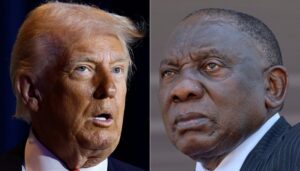
No! It’s about land. Zionism isn’t a religion; it’s a political ideology. Most Palestinians are Muslim, but many are Christian. Interestingly, some evangelical Christians, especially within the MAGA movement, are reassessing support for Israel. They’re witnessing Jewish people spitting at Christians in Jerusalem and churches being bombed in Gaza. Meanwhile, figures like Donald Trump and Mike Huckabee rush for photo ops at the Western Wall, ignoring the nearby Church of the Holy Sepulchre, a site central to Christianity. It shows Zionism has no room for Christians or Muslims.
How has your Islamic faith influenced your activism?
Justice is a core theme in the Quran. What led to my conversion was the principle that justice must be delivered to everyone—not just family and friends, but also enemies – and in equal measure. Belief in God gives me strength; I know I am not on the wrong side of history, and He will support me.
How did the Israeli response to the flotilla impact you?
They feared the flotilla because it united people against Zionism. Normally, they ignore groups like the ISM, but the flotilla rattled them, as seen in Ben Gvir’s statements. These are emotionally damaged people – something is missing in their humanity.
How did your detention compare to being captured by the Taliban in 2001?
The Israelis denied us access to lawyers and doctors, and we were sleep-deprived. I’ve never experienced anything like that with the Taliban. Israeli prisons are brutal, illegal, and torturous. Hundreds of children are held in “administrative detention,” without trial or charge.
Have you set limits as an activist?
Eleanor Roosevelt said, ‘Women are like tea bags; we never know how strong we are until we are in hot water.’ I don’t know my limits, but I was so angry when challenged that at one stage, I could have killed them.
How is the Palestinian struggle connected to global freedom movements?
It’s linked with any fight for freedom. Coming from Scotland, we understand oppression. The Scots have been colonised and persecuted, and we still see Scotland as occupied. This shapes our unconditional support for Palestine.
What advice do you have for young activists?
Take things in bite-sized steps. Don’t get overwhelmed. With the BDS movement, start small – boycott five things, then ten. Don’t pressure yourself; be comfortable with your actions. Most importantly, stay informed about what is happening.