Al-Qalam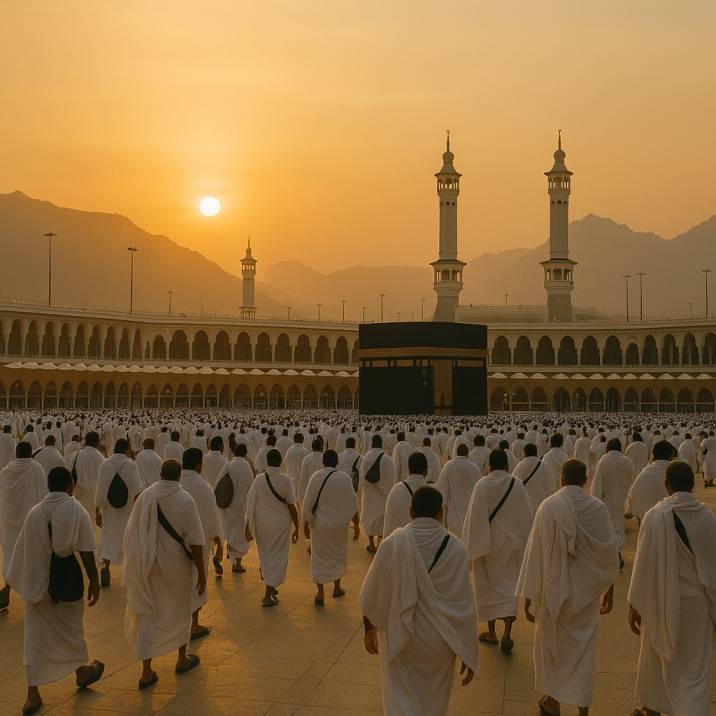
By Dr Imam Rashied Omar
As we stand on the threshold of the lunar month of Dhul Qaʿidah, the second of the three sacred months of Hajj, we enter a season of deep spiritual longing. Following the month of Shawwal, which marks the beginning of the Hajj season, we now move closer to its culmination in the first ten days of Dhul Hijjah, now only a few weeks away.
This sacred season invites us to turn our hearts toward the Sacred House of Allah in Makkah, to form and cultivate the intention for pilgrimage, and to prepare, spiritually, materially, and morally, for one of the most profound acts of devotion in Islam. As Allah, the Most-High, reminds us in the Qur’an: “The Pilgrimage (Hajj) falls in well-known months” (Q2:197). From the Prophetic traditions (hadith), these “well-known months” are understood to include Shawwal, Dhul Qaʿidah, and the first ten days of Dhul Hijjah. We are thus already within this sacred window, a time of sacred longing and return. Yet, as we approach this year’s Hajj, our anticipation is tempered by concern.
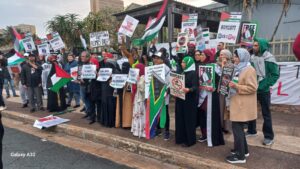
In recent weeks, even the journey of ʿUmrah has been disrupted for many. As a direct consequence of the US- and Israeli-led war on Iran, and its wider regional impact across the Middle East, flights have been cancelled, airspace closed, and thousands of pilgrims left stranded or unable to travel. When these systems are destabilised, the pathways to the Sacred House become fragile.


War Escalation and Its Consequences
It is within this context that the escalating war on Iran, and its wider impact across the Middle East region, demands our urgent attention. Should this deadly conflict intensify, its consequences will extend far beyond the battlefield. Millions of intending pilgrims, many of whom have spent years saving, planning, and preparing, may find their journeys delayed, disrupted, or even rendered impossible. Airspace insecurity, rising travel costs, and heightened geopolitical tensions all threaten to undermine the conditions necessary for safe and equitable access to Hajj. This moment calls for a deeper moral and spiritual reckoning.
A Moral and Spiritual Reckoning
In light of these unfolding realities, the potential disruption of Hajj calls us to a deeper moral consciousness. It reminds us that acts of worship are never isolated from the conditions of our world. Peace is not only a political aspiration; it is a spiritual necessity. When pathways to worship are obstructed by violence, it is not only physical infrastructure that is damaged, but the very rhythms of sacred life itself.
In this regard, the Prophetic guidance speaks with renewed urgency. ʿAbdullah ibn ʿAbbas (may Allah be pleased with him) reported that the Prophet Muhammad (peace be upon him) said: “Hasten to perform Hajj, for none of you knows what may arise to prevent him.” (Musnad Aḥmad; Sunan Ibn Majah). This teaching calls us to recognise both the unpredictability of life and the fragility of opportunity. Its ethical force is profound: it reminds us that spiritual opportunities, especially those connected to great acts of devotion such as Hajj, are never guaranteed. Life’s uncertainties, whether of health, wealth, or circumstance, may intervene without warning. The Prophet (pbuh) thus calls us to a posture of readiness: to respond without delay when the invitation to draw nearer to the Divine is placed before us.
If Hajj embodies unity, peace, and divine hospitality, then we must ask ourselves: are we living these values? Are we striving to remove the injustices and oppression that obstruct not only the pilgrimage itself, but also the dignity and flourishing of human life? As we approach the sacred days ahead, this question becomes a call to action, inviting us to align our lives with the moral vision of Hajj, and to embody, in both spirit and practice, the hope for a more just and peaceful world.



A Call to Prayer
As we stand on the cusp of Dhul Qaʿidah, only weeks away from the first ten days of Dhul Hijjah, we are called not only to prepare, but to respond with moral clarity. We must raise our voices, through prayer, advocacy, and ethical witness, against the forces that threaten both human life and the sanctity of our sacred obligations.
We turn to Allah in humble supplication: O Allah, bring an end to unjust aggression and protect the sanctity of life. Preserve the pathways to Your Sacred House, grant safety to all who intend the Hajj, and restore peace, dignity, and justice to our world.
For some, the path to Hajj this year may be uncertain or even closed, but the path to Allah remains open. Every act of justice, every gesture of compassion, and every moment of sincere remembrance is a step on that greater journey.
As we prepare for the sacred days ahead, let us hold fast to both hope and responsibility: to pray for peace, to protect the vulnerable, and to embody the ethical vision of Hajj, humility, equality, and surrender before the Divine. May the call of Hajj—Labbayk Allāhumma Labbayk—resound without obstruction, carried by hearts and bodies able to journey in peace.