Al-Qalam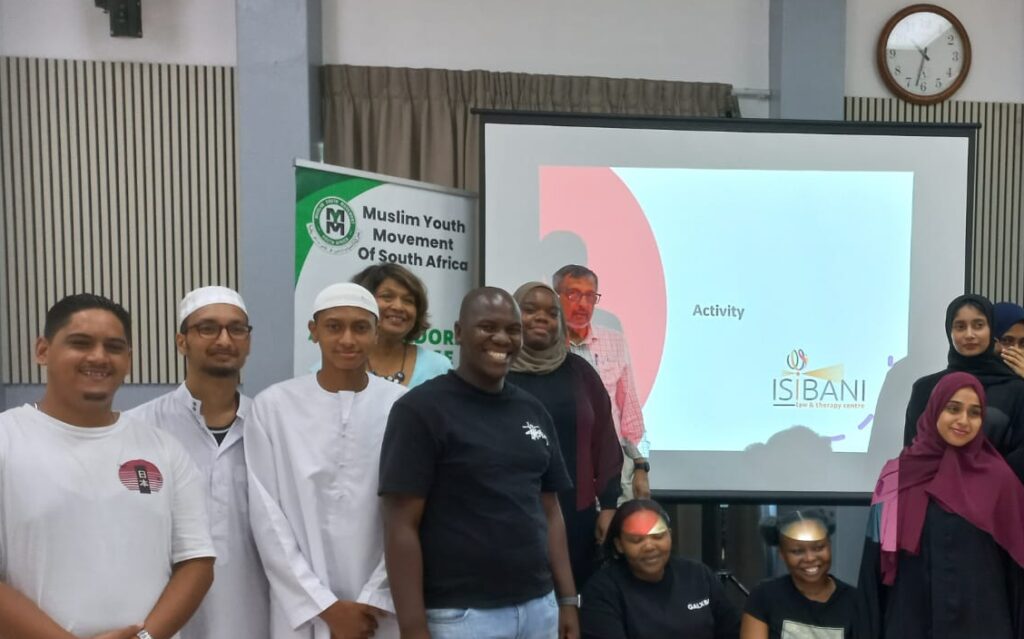
By Azra Hoosen
The Muslim Youth Movement of South Africa (MYMSA) hosted its Ambassadors for Change training programme in Port Shepstone, equipping youth with both the understanding and the tools to engage meaningfully with the challenges they face.
The workshop covered a wide range of themes, including self-reflection, the root causes of conflict in Africa and globally, racism and discrimination, gender sensitisation, gender-based violence, human rights, as well as facilitation and organisational skills.
The programme was conducted at Port Shepstone Islamic School, delivered in three segments over the course of six days, concluding on April 1, 2026. It brought together a team of facilitators who guided participants through both theoretical and practical components of the training.
The session on human rights and responsibilities was facilitated by Advocate Neliswa Nota and the team from the Isibani Law and Therapy Centre, adding legal and social insight to the discussions.
One of the Facilitators, Arun Naicker, told Al-Qalam that at first, participants were very quiet and reserved. However, once they understood the participatory approach, they became fully engaged in the sessions.
This shift was intentional. “Young people often feel they are not listened to or are given roles that cannot be challenged. This programme creates a space for them to express their views and engage with issues they face daily,” said Naicker. The programme sought to challenge that dynamic by placing participants at the centre of the learning process.


“Most of the group shared the need to become more confident public speakers. Each learner was given the opportunity to lead and present, and that made a significant difference,” she added.
Through debates, group work and structured discussions, participants were encouraged to grapple with difficult topics, not as distant concepts, but as lived realities.
For 16-year-old participant Sana Mulla, the experience was both confronting and empowering. “As a Matric student, I realised I have a very short window left to make a real impact at my school. I wanted to move away from just identifying problems and actually learn how to solve them,” said Mulla.
A session on human trafficking proved particularly impactful.
Sana told Al-Qalam that it completely stripped away the idea that these things only happen somewhere else. “It made me realise that our own communities and peers are vulnerable. It shifted my perspective from being a student to being a protector,” she said.
The teenager described this as a turning point in how she understands leadership: “Before the workshop, I thought being a leader meant carrying everything on your own shoulders. But I learned that leadership is about facilitation – creating a space where everyone feels they have a stake in the outcome.”
Beyond awareness, the programme placed a strong emphasis on leadership development. Participants were required to lead activities and present lesson plans, many for the first time, building both confidence and practical skills.



“Most of the group shared the need to become more confident public speakers. Each learner was given the opportunity to lead and present, and that made a significant difference,” said Naicker.
All participants commended the supportive environment created by facilitators. “They were kind-hearted, patient and understanding. They empowered us to be the best versions of ourselves and made us feel like a unified family,” said one participant.
By the end of the programme, the transformation was visible. The same participants who began the training reserved and uncertain were now leading discussions, engaging confidently and taking ownership of their ideas.
The programme concluded with lesson plan presentations, debates and a closing ceremony organised by the participants themselves, which was a reflection of both their growth and their ability to take initiative.
The training also extended beyond the classroom. As part of the programme’s communication component, two participants took part in a radio interview on Radio Al-Ansaar. The experience reinforced the programme’s focus on building not only awareness, but the confidence to communicate and advocate on social issues.
As these young ambassadors return to their schools and communities, the focus will shift from training to action, applying what they learned to the realities they are already facing.